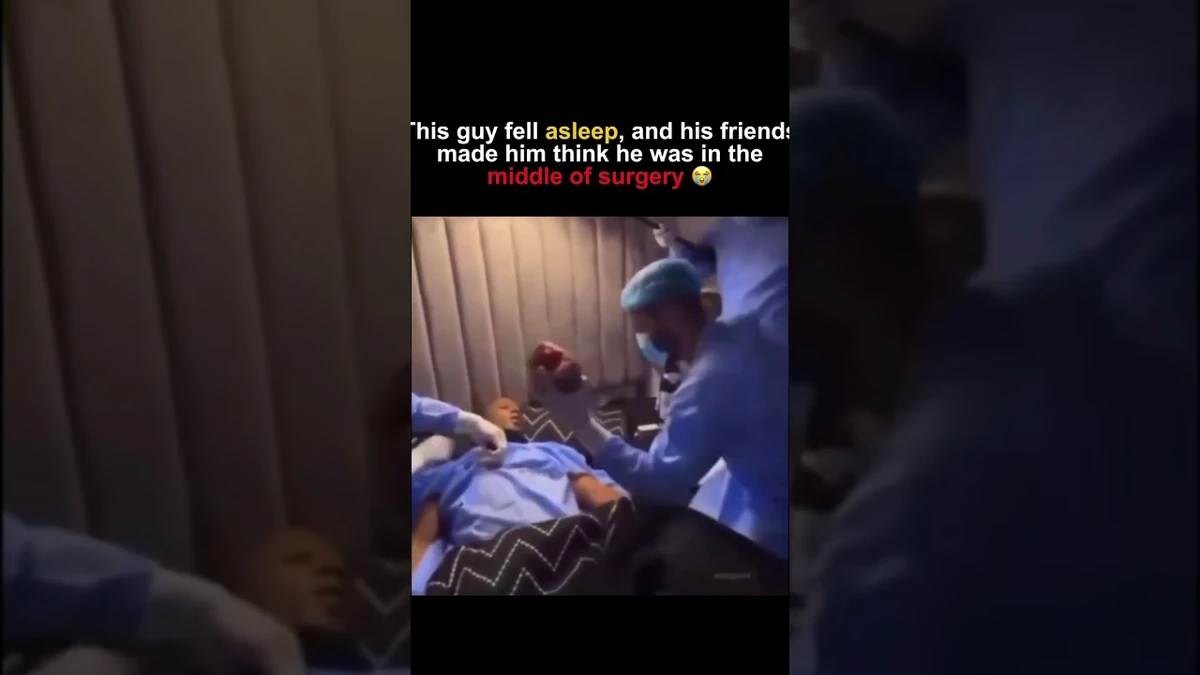
The feeling of waking up in an unfamiliar place after a long night of social festivities is a common trope in comedy, but a recent viral video has taken the concept to a cinematic extreme. A short clip uploaded by the creator handle Mathematix Lab on YouTube has captured the internet’s attention by showing the disorienting moment a man appears to wake up not on a couch or in a spare bedroom, but in the middle of a fully operational surgical theater.
The footage, which has rapidly climbed the trending charts, taps into a specific type of modern anxiety regarding “blackout” moments and the lengths to which friends will go to pull off an elaborate gag. Within seconds of the video starting, viewers are transported into a cold, sterile environment that stands in sharp contrast to the implied warmth and chaos of a house party, immediately setting the stage for a viral moment that blurs the line between reality and high-budget sketch comedy.
Inside the Surreal Surgical Suite Prank
The video begins with the protagonist slowly opening his eyes to the harsh, clinical glow of overhead surgical LED arrays. Instead of the familiar ceiling of a friend’s apartment, he is greeted by the sight of multiple individuals dressed in full medical scrubs, masks, and caps, hovering over him with professional intensity. The sound design of the clip includes the rhythmic, high-pitched beeping of a heart rate monitor, adding a layer of sensory realism that heightens the perceived stakes of the situation.
As the man on the gurney attempts to sit up, his movements are sluggish and heavy, perfectly mimicking the grogginess associated with deep sleep or a heavy night of celebration. The “medical staff” in the room maintain their composure, reacting with the practiced calmness of real surgeons, which only serves to increase the protagonist’s visible panic. He looks around the room, taking in the stainless steel equipment and the specialized medical monitors, his face contorting in a mixture of disbelief and genuine fear.
The logistical execution of this specific scene has become a primary talking point for viewers. The set is not a mere bedroom with a white sheet; it features what appears to be legitimate medical grade equipment, from the anesthesia machine to the adjustable surgical table. This level of detail suggests either a massive budget for a personal prank or, more likely, the use of a professional “standing set”—specialized studios designed to look like hospitals for film and television production.
Analyzing the Logistics of High-Stakes Set Design
In the world of modern content creation, the shift from “raw” home videos to cinematic-quality production is becoming the standard for hitting the viral jackpot. Creators like those behind Mathematix Lab often utilize professional resources to ensure their skits have maximum impact. Renting a medical standing set in major production hubs can cost anywhere from $500 to $2,500 per day, depending on the complexity of the equipment provided. This investment pays off when the realism of the environment causes the audience to question if what they are seeing is a genuine news event or a scripted masterpiece.
The “waking up in surgery” prank relies heavily on the “uncanny valley” of medical environments. Because most people have a natural aversion to hospitals and a fear of involuntary medical procedures, the visual cues—the blue drapes, the metallic clinking of tools, and the obscured faces of the “doctors”—trigger an immediate emotional response. By placing a relatable character in this high-stress environment after a mundane event like a party, the creators create a narrative tension that is difficult to look away from.
Furthermore, the timing of the video’s release coincides with a growing trend of “extreme hospitality” or “extreme prank” videos where the goal is to completely gaslight the subject into believing they have entered a different reality. This specific subgenre of content often involves changing the subject’s location while they are asleep, a feat that requires significant coordination, physical effort, and a total lack of noise during the transport phase.
The Digital Crowd Weighs In on Hospital Humor
As with any video that skirts the line between humor and psychological distress, the comments section has become a battlefield of wit and skepticism. Many users were quick to point out the potential “medical bill” trauma that would accompany such a prank if it were real, especially within a North American context. The juxtaposition of a fun night out followed by the most expensive “room” in a hospital provided a rich vein of dark humor for the internet to mine.
“The party was free, but that wake-up call is going to cost $50,000 in insurance deductibles,” joked one viewer, highlighting the immediate financial fear such a scene evokes. Another commenter noted the protagonist’s acting, stating, “That look of pure confusion is exactly how I feel when I wake up on a Tuesday morning for work, let alone in a surgery center.” The relatability of the confusion, even in such an absurd scenario, is what keeps the engagement metrics high.
However, a segment of the audience remains skeptical about the “authenticity” of the reaction. “You can tell it’s a set because the heart monitor isn’t actually connected to his finger,” one observant viewer pointed out, sparking a sub-thread about the technical inaccuracies of the equipment shown. Despite these observations, the consensus remains that the entertainment value outweighs the need for total clinical accuracy. The humor lies in the “what if” scenario that many have joked about with friends but few have ever seen executed with such visual fidelity.
From Simple Gags to Cinematic Production Values
The success of this Mathematix Lab video illustrates a broader shift in how digital stories are told. We are no longer in the era of grainy phone footage of people falling off chairs; we are in the era of the “produced viral.” This involves scriptwriting, lighting directors, and professional-grade post-production. The goal is to create a 60-second experience that feels like a scene from a feature film, designed specifically to stop the “infinite scroll” on platforms like YouTube Shorts and TikTok.
This evolution is driven by the hyper-competitive nature of the attention economy. When every user has access to a high-definition camera, the only way to stand out is through the scale of the concept. Waking up in an operating room is a “high-concept” gag that requires more than just a funny person; it requires an environment that tells a story before a single word is spoken. The sterile blue and white color palette of the video immediately tells the viewer that something is wrong, creating an instant hook.
As of the latest reports, the video continues to gather millions of views across various social aggregators. While the “patient” in the video eventually realizes he is the victim of a elaborate joke, the impact on the audience remains. It highlights the lengths creators will go to for a few seconds of digital fame, transforming a simple “fell asleep” story into a production that rivals the set design of a network medical drama. Whether viewed as a harmless prank or a high-effort comedy sketch, the “Operating Room Party” remains a standout example of modern viral storytelling.