The ritual is as familiar as the safety demonstration itself. As the aircraft pushes back from the gate, cabin crew members march down the aisle, their eyes scanning for the tell-tale glow of a smartphone screen. The instruction is clear: “Please ensure all electronic devices are switched to airplane mode.” For most travelers, this is a minor inconvenience or a moment of mild anxiety—a lingering fear that a single missed toggle could somehow send the aircraft into a tailspin.
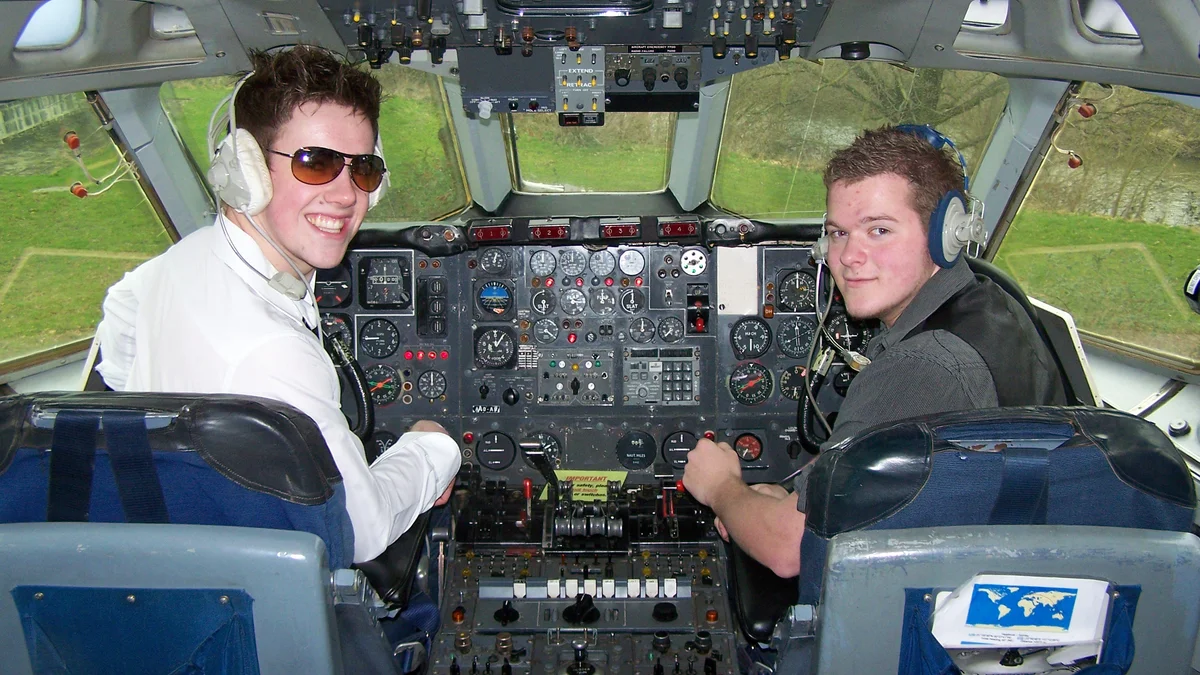
However, a fascinating viral discussion on Quora has pulled back the curtain on what actually happens in the cockpit when a passenger neglects this duty. Far from the catastrophic engine failure often depicted in Hollywood thrillers, the reality is a mix of technical interference and professional frustration. A former airline pilot, sharing insights on the Quora Discussion Desk, has detailed exactly how those stray cellular signals manifest miles above the ground, and why the rule exists today.
Viral Discussion on Quora: “Former Airline Pilot Explains What Actually Happens When You Forget to Turn On Airplane Mode”
The Technical Breakdown of the “Dit-Dit-Dit” Sound
When a mobile phone is not in airplane mode, it constantly attempts to communicate with cellular towers on the ground. As the plane gains altitude and speed, the phone must work significantly harder to maintain a connection. The pilot explained that the primary issue is not that the plane will fall out of the sky, but rather the audible interference it creates in the flight crew’s sensitive communication equipment.
- Audible Interference: Pilots hear a distinct rhythmic clicking or buzzing sound in their headsets, similar to the noise an old speaker makes when a phone is placed too close to it.
- The “Near-Far” Problem: At high altitudes, a phone loses its primary tower and begins scanning at maximum power to find a new one, increasing the strength of the radio frequency interference.
- Communication Blocks: This noise can occasionally overlap with critical instructions from Air Traffic Control (ATC), forcing pilots to ask for information to be repeated.
- Battery Drainage: For the passenger, leaving the phone on is a recipe for a dead battery, as the device exhausts its energy trying to reach towers that are miles away and moving rapidly.
The aviator noted that while modern aircraft shielding has improved significantly, the sheer volume of devices on a standard commercial flight means that even a small percentage of forgotten phones can create a persistent “drone” in the pilot’s ears. This is not just a nuisance; in the high-stakes environment of a landing approach or a complex takeoff, clear communication is the most vital safety tool available to the crew.
Why Ground Networks Care More Than You Think
While the cockpit interference is the most immediate concern for the flight crew, there is a secondary reason for airplane mode that involves the infrastructure on the ground. When you are standing on a street corner, your phone connects to one or two nearby towers. When you are flying at 500 miles per hour at 30,000 feet, your phone is “visible” to hundreds of towers simultaneously.
This creates a phenomenon known as a “signaling storm.” Because the phone is moving so fast, it triggers a rapid-fire sequence of handoffs between towers. If hundreds of passengers on dozens of flights over a city all had their phones active, the ground network would be flooded with unnecessary data requests. This is why telecommunications regulators, such as the FCC in the United States, have historically been even stricter about the rule than aviation authorities.
The pilot’s explanation clarified that the aviation industry operates on a “zero-risk” margin. Even if the probability of a phone interfering with the plane’s navigation system is incredibly low, the potential consequence—however unlikely—is high enough that the industry maintains a blanket ban. It is a matter of cumulative risk; one phone is likely fine, but 200 phones acting as high-powered radio transmitters could create an unpredictable electromagnetic environment.
The Internet Reacts: Guilt, Skepticism, and Relief
The Quora thread sparked a massive wave of responses from frequent flyers and tech enthusiasts alike. The community reaction highlights a shift in how the public views airline regulations, moving from blind compliance to a desire for technical transparency.
- The “Accidental Rebel”: One commenter admitted to a common fear, stating, “I once realized halfway through a flight that my iPad was still searching for a signal. I spent the rest of the flight convinced I was the reason for every bit of turbulence we hit. Knowing it just makes a buzzing sound in a headset makes me feel slightly less like a criminal.”
- The Tech Skeptic: Another user pointed out the evolution of the rule, noting, “If phones actually crashed planes, they wouldn’t let us bring them on board at all. It’s clearly about the pilots’ sanity and the ground towers, but they use the ‘safety’ angle because it’s the only way to get people to listen.”
- The Professional Sympathizer: A former radio technician chimed in to support the pilot’s claims: “People don’t realize how sensitive those headsets are. Imagine trying to hear a whispered coordinate from ATC while a ‘dit-dit-dit-dit’ sound is blasting in your ear. It’s an avoidable workplace hazard.”
- The Battery Realist: A frequent business traveler added, “I turn it on strictly to save my battery. There is nothing worse than landing in a new city and realizing your phone died because it spent four hours trying to find a tower in the middle of the clouds.”
The Modern Context: 5G and the Future of In-Flight Connectivity
The discussion also touched upon the recent headlines regarding 5G deployment near airports. While the Quora pilot focused on the traditional “buzzing” interference, the industry is currently grappling with a new challenge. 5G signals, particularly those in the C-Band, operate at frequencies very close to those used by aircraft radio altimeters—the tools that tell a pilot exactly how far they are from the ground during low-visibility landings.
This has led to a renewed emphasis on the airplane mode rule. While many European airlines are beginning to allow 5G on board using special “pico-cells” (mini-towers inside the plane), the global standard remains cautious. The “pico-cell” acts as a middleman, allowing the phone to communicate at very low power, which prevents the interference issues described by the pilot.
The takeaway from the viral discussion is a shift in perspective. Airplane mode isn’t a magical shield that prevents a crash; it is a professional courtesy and a technical necessity. By toggling that switch, passengers are ensuring that the two people responsible for their safety can hear their instructions clearly, without the distracting “sound of a text message” ringing in their ears