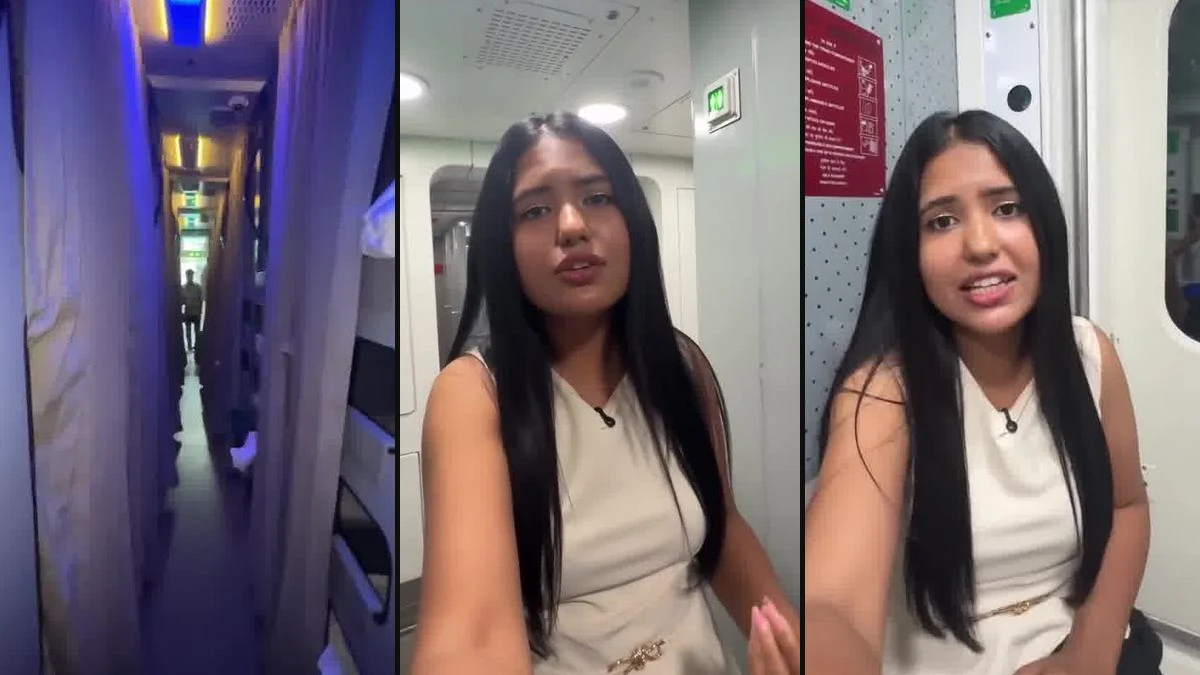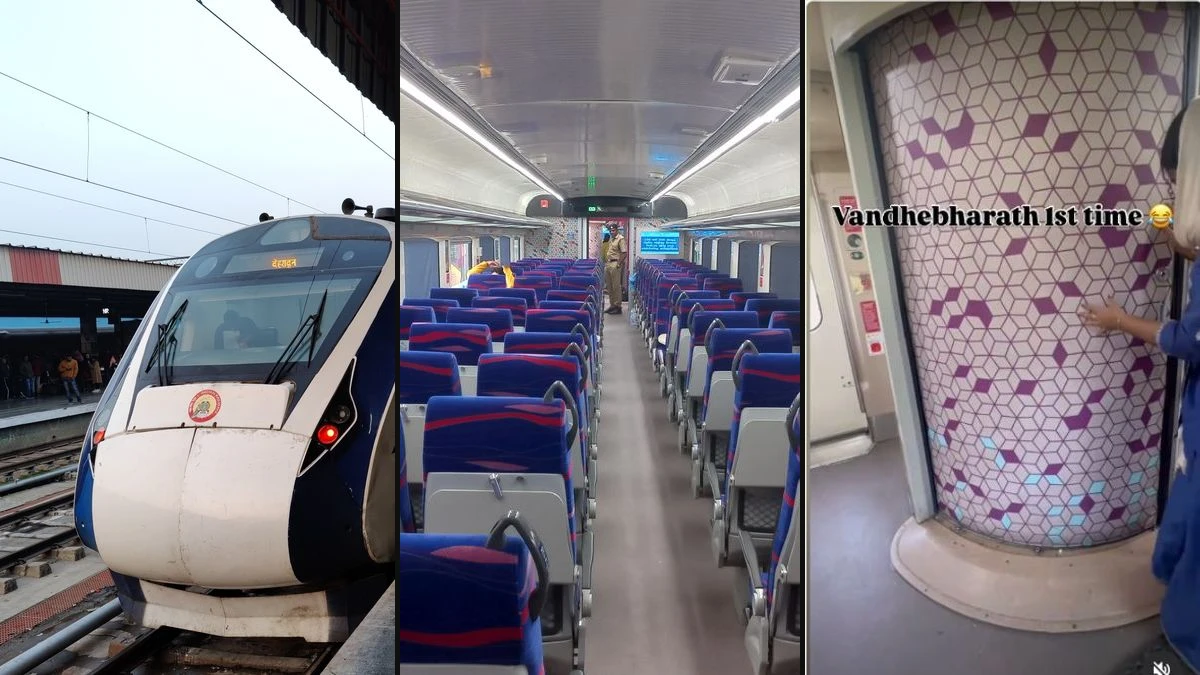
On Wednesday, November 18, 2026, a 35-second smartphone video recorded inside a Vande Bharat Express coach began circulating rapidly across Instagram and X. The clip captured an everyday travel dilemma that thousands of Indian rail passengers immediately recognized: a first-time commuter standing in the stainless steel vestibule, hesitating before the curved motorized door of the train’s vacuum bio-toilet, uncertain whether to pull the handle, press an illuminated button, or wave at an unseen sensor.
As the door remained stubbornly closed, the passenger tried pushing the outer panel, paused, and looked around in amusement before another traveler stepped forward to point out the illuminated green push-button switch mounted beside the frame. The moment, shared by traveler @trip_with_farza with the caption highlighting the spotless washrooms, accumulated more than 2.8 million views within days, unlocking a flood of relatable confessions from travelers who had experienced the exact same confusion aboard India’s flagship semi-high-speed fleet.
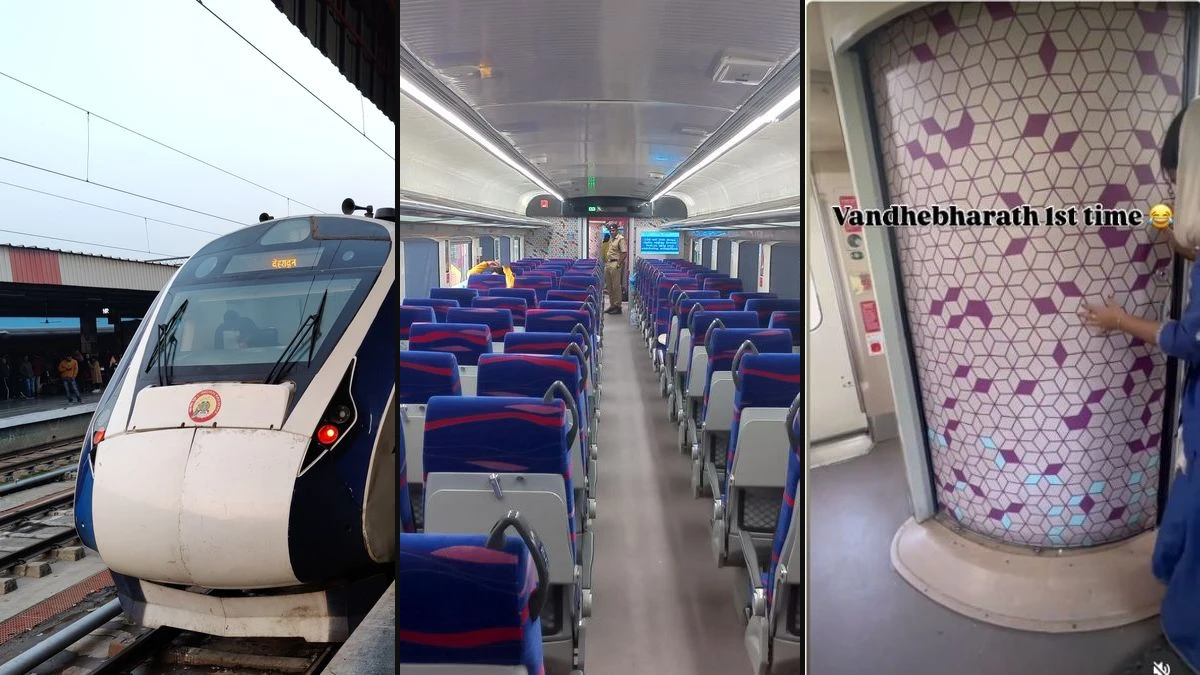
The Technological Leap from Slam Latches to Motorized Tracks
For over seven decades, passenger travel on Indian Railways was defined by the iconic blue ICF coaches manufactured at Perambur, Chennai. Those traditional cars utilized heavy, manual exterior doors and washrooms fitted with simple cast-iron or brass slam latches. Opening or securing a lavatory was purely mechanical: a passenger lifted a lever or slid a physical horizontal bolt into an iron strike plate.
The introduction of Train 18, officially branded as the Vande Bharat Express in 2019, completely overhauled that physical interface. Designed as semi-high-speed trainsets capable of commercial operation at 160 km/h, the coaches were built to modern European and Japanese crashworthiness standards.
To maintain cabin pressurization, minimize exterior aerodynamic drag, and control acoustic noise from the tracks, Integral Coach Factory engineers replaced manual washroom fittings with an automated curved sliding door system. Each lavatory door operates on microprocessor-controlled pneumatic actuators, linked to an electronic interlock circuit:
- Touch-Activated Opening: Exterior and interior walls feature push-button illuminated touch switches rather than physical turning latches.
- Microprocessor Lock Logic: Once inside, a passenger must press a dedicated “Lock” button, which drives an internal bolt and shifts the exterior LED status from green to red.
- Fail-Safe Vacuum Differential: The doors are integrated with the rake’s vacuum bio-toilet flush cycle, ensuring odors do not enter the passenger cabin when pressurized flush cycles fire.
- Manual Emergency Override: In the event of a coach power cut or battery failure, a mechanical red lever concealed beneath a plastic flip-cover allows the door to be forced open manually.
While frequent business commuters accustomed to metro networks or airport restrooms adapted quickly, the interface posed an immediate learning curve for passengers embarking on their first semi-high-speed journey.
Social Media Confessions and The Great Red Button Fear
The viral clip struck an enormous chord on Reddit communities like r/indianrailways and r/india, where hundreds of travelers shared their own initial missteps with the train’s automated facilities.
The most widely reported anxiety centered around button confusion. On earlier Vande Bharat rakes, the emergency assistance call button—marked in bright red—sat in close proximity to the green door operation switch. On r/indianrailways, commuter u/track_runner_99 shared an encounter from a Mumbai-Gandhinagar trip that received over 1,200 upvotes:
“My first time on the Vande Bharat, I walked into the washroom, shut the door, and immediately panicked because there was no manual bolt. I saw a red button and almost slammed it, thinking it was the lock. Thankfully, I read the tiny English lettering just in time: it was the Emergency Passenger Alarm. If I had pressed it, the train brakes would have engaged near Surat. I stood there for two full minutes staring at the door before noticing the green lock switch.”
Another traveler on X, responding to the viral reel, pointed out the optical sensor misunderstanding:
“I spent twenty seconds waving both my hands in front of the door frame like I was trying to summon an elevator in a sci-fi film. People waiting in the vestibule started laughing. A ticket checker walked past and simply tapped the button with his finger. We are so conditioned by airport automated washroom sensors that a button that requires a physical press throws us off.”
Commenters noted that traveling with elderly parents or young children created additional stress. When passengers are accustomed to feeling the physical resistance of a metal deadbolt, an electronic light switching from green to amber does not always provide immediate psychological confirmation that the door is firmly secured against outside intrusion.
Industrial Ergonomics and User-Centered Public Transit
Industrial design experts who analyzed the online discussion highlighted that the viral reaction is not an indictment of Indian passengers, but a textbook case study in transit human-machine interface (HMI) design.
In high-speed transit systems like Japan’s Shinkansen, France’s TGV, and Germany’s Intercity Express (ICE), automated washroom doors employ multi-modal confirmation cues. When a passenger presses the lock button, the system responds through three separate sensory channels simultaneously:
- Acoustic Confirmation: A clear synthesized voice prompt announces: “Door locked” or emits a distinctive two-tone locking chime.
- High-Contrast Visual Feedback: A full perimeter LED light ring encircling the push-button illuminates in bright red.
- Physical Mechanical Resistance: The manual override knob rotates visibly, providing clear tactile evidence of security.
On the initial production runs of Vande Bharat 1.0 rakes, Indian Railways relied primarily on small 1.5-inch circular LED indicators with bilingual labels printed in 12-point font. In the dimly lit vestibule corridor between moving cars, travelers with mild visual impairment or non-English speakers found the small indicator lights difficult to decipher quickly.
Transit advocates pointed out that user-friendly design requires immediate cognitive ease. When an individual needs to access a restroom, their cognitive bandwidth is naturally focused on urgent biological needs, leaving little patience to decode complex multi-button control panels.
Passenger Guidelines and Railway Revisions
In response to sustained traveler feedback gathered from commercial routes across the country, railway production units have quietly begun refining the vestibule layouts on newer Vande Bharat rakes.
Engineers at ICF Chennai and the Rail Coach Factory (RCF) in Kapurthala have introduced several functional modifications on the 2.0 and sleeper variants:
- Larger Tactile Push Pads: Replacing small flush-mount buttons with oversized, tactile rectangular touchpads that offer clear physical travel when pressed.
- Braille-Embossed Panels: Integrating raised Braille numbering and lettering for visually impaired passengers directly onto the switch surrounds.
- Voice-Assisted Interlocks: Testing automated voice announcements inside the washroom cubicle that announce “Washroom Locked” upon successful electronic engagement.
- Distinct Alarm Separation: Relocating the red Emergency Pull switch higher onto the bulkhead wall to prevent accidental panic presses.
For passengers boarding the Vande Bharat Express across any of its active corridors, railway facilitation staff recommend three simple steps when using onboard facilities: tap the outer illuminated green pad once to open the sliding door, press the dedicated inside “Lock” switch until the red indicator lights up, and check the bottom right corner of the door frame for the red manual release knob if manual exit is ever required during a power interruption.
The viral video and the conversations it sparked reflect India’s rapid infrastructure transition. As high-speed trainsets replace conventional rolling stock across nationwide trunk lines, closing the gap between advanced aerospace engineering and everyday intuitive passenger usability remains a central milestone in modern public transit.