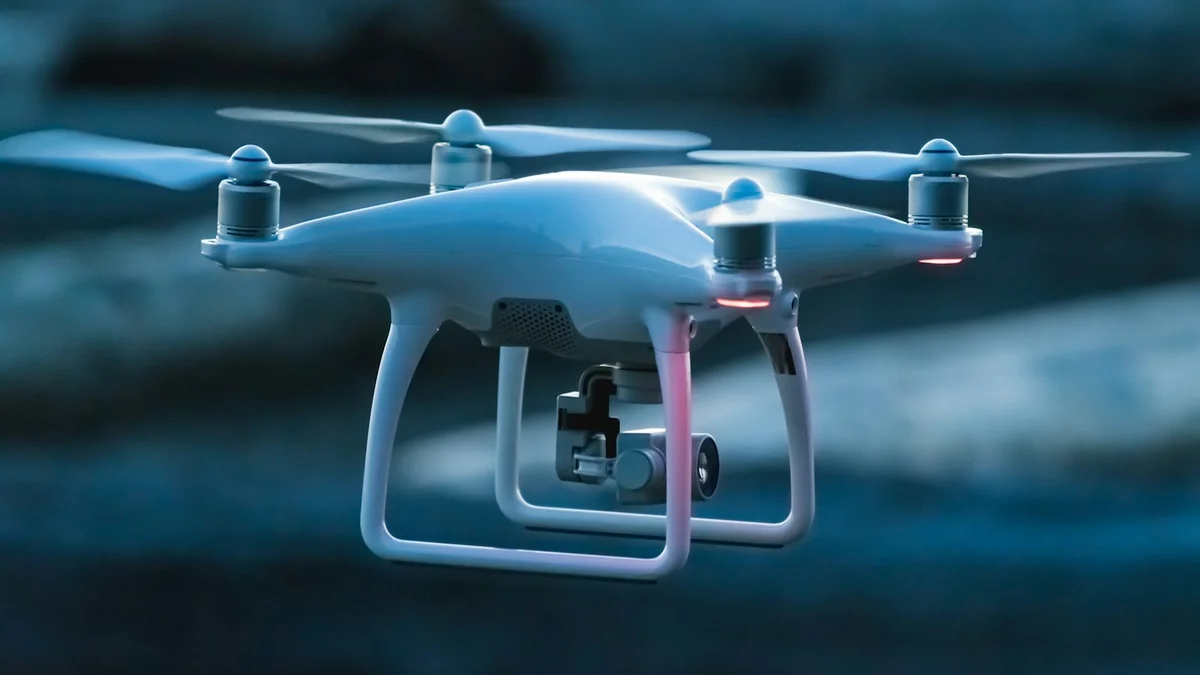
For a few bewildering minutes on social media, millions of travelers and aviation enthusiasts wondered whether the official communications apparatus of the United States federal government had suffered a catastrophic digital breakdown. Without any context, introductory preface, or accompanying imagery, the verified account of the Transportation Security Administration (TSA) published a jarring, single-paragraph wall of text across X (formerly Twitter) that consisted solely of one word repeated dozens of times in erratic, alternating typography:
drone drone drone drone drone drone drone drone drone drone dr0ne dr0ne dr0ne dr0ne drone drone dr0ne dr0ne dr0ne dr0ne dr0ne dr0ne dr0ne dr0ne dr0ne dr0ne dr0ne dr0ne dr0ne dr0ne dr0ne dr0ne drone drone dr0ne dr0ne dr0ne dr0ne drone drone drone drone drone drone drone drone.....
— TSA (@TSA) November 5, 2026
The bizarre 46-word transmission—peppered with sporadic numerical zeroes replacing the letter “o”—racked up hundreds of thousands of impressions within seconds. Comment sections instantly erupted into a mixture of chaotic humor and genuine bewilderment. Had an agency social media manager left their phone unlocked in a coat pocket? Had a stray pet marched across a mechanical keyboard in a federal office? Or had an unauthorized automated script run amok in the agency’s publishing queue?
The agency soon delivered the punchline—and with it, a stern federal safety reminder that resonated far beyond standard government press releases.
“Droning On About It”: The Punchline Behind the Stunt
Minutes after the cryptic post set timelines ablaze, the TSA followed up with a clarification that swiftly reframed the internet joke into an urgent aviation safety campaign:
“Sorry, we were just droning on about it. But seriously—airports are strictly No Drone Zones. Flying an unauthorized unmanned aircraft near an active flight path isn’t just dangerous; it is a federal crime.”
The viral stunt was a calculated, tongue-in-cheek gambit designed to cut through social media fatigue and direct public attention to the Federal Aviation Administration (FAA) airspace guidelines. With consumer quadcopters becoming increasingly accessible, affordable, and technologically sophisticated, federal aviation regulators have faced a persistent surge in recreational pilots inadvertently or recklessly operating drones near major airport approach corridors, helipads, and commercial runways.
"drone drone drone drone drone drone drone drone drone drone dr0ne dr0ne dr0ne dr0ne drone drone dr0ne dr0ne dr0ne dr0ne dr0ne dr0ne dr0ne dr0ne dr0ne dr0ne dr0ne dr0ne dr0ne dr0ne dr0ne dr0ne drone drone dr0ne dr0ne dr0ne dr0ne drone drone drone drone drone drone drone drone....."
By replacing dry bureaucratic language with chaotic timeline disruption, the TSA successfully transformed what would have been an easily ignored public service advisory into one of the most widely shared federal posts of the year.
The Math & Legal Benchmarks: Fines, Airspace Classes, and Prison Time
While the framing was intentionally humorous, the legal and regulatory framework governing unmanned aircraft systems (UAS) in the United States is unyielding:
- The 400-Foot Ceiling: Under FAA Title 14 CFR Part 107, all recreational and commercial small unmanned aircraft must operate at or below 400 feet above ground level (AGL) in uncontrolled Class G airspace, unless operating under a specific regulatory waiver.
- Controlled Airspace Zones: Operating within Class B, Class C, or Class D controlled airspace—typically extending in a 5-mile nautical radius around towered commercial airports—requires prior electronic authorization through the FAA’s Low Altitude Authorization and Notification Capability (LAANC) system or the B4UFLY airspace management portal.
- Sky-High Civil Fines: Under the FAA Modernization and Reform framework, the federal government can levy administrative civil penalties reaching up to $75,000 per violation against individuals who operate unauthorized drones in restricted airspace or interfere with commercial aviation.
- Criminal Prosecution & Prison: Recklessly operating a drone in a manner that endangers the safety of an aircraft in flight constitutes a federal felony under 49 U.S.C. § 44806 and 18 U.S.C. § 32. Penalties include criminal fines up to $250,000 and up to 3 years in federal penitentiary, escalating to 20 years if the action results in severe endangerment or loss of life.
- Remote ID Compliance: Under federal regulations (14 CFR Part 89), all drones requiring registration must continuously broadcast digital Remote ID identification, transmitting the aircraft’s serial number, exact latitude, longitude, altitude, velocity, and ground pilot location to federal monitoring receivers.
The Physics of Turbine Ingestion: Why Drones Are Not Just “Plastic Birds”
A central reason federal authorities respond so aggressively to airport drone incursions is rooted in basic aerospace engineering and impact mechanics. Many amateur hobbyists incorrectly assume that because passenger jets are certified to survive bird strikes, a lightweight commercial drone weighing two to four pounds poses minimal risk to a massive commercial airliner.
Aviation safety research, however, reveals a starkly different reality:
- Structural Density and Rigid Components: Birds consist largely of soft muscle tissue, fluid, and hollow bone structures. In contrast, even entry-level consumer quadcopters contain solid brushless neodymium-magnet electric motors, hardened carbon-fiber prop arms, aluminum framing, and high-density copper wiring.
- The Lithium-Ion Combustion Hazard: Unlike biological strikes, modern drones are powered by high-capacity lithium-polymer (LiPo) battery packs. When sucked into the intake of a modern high-bypass turbofan (such as a CFM LEAP-1B on a Boeing 737 MAX or a Pratt & Whitney PW1100G on an Airbus A320neo) at approach speeds between 130 and 160 knots, the compression stages instantaneously crush the battery cells. This induces catastrophic internal short circuits, chemical thermal runaway, and volatile fires within the turbine compressor sections.
- Uncontained Shrapnel Risks: Research conducted by the FAA’s Alliance for System Safety of UAS through Research Excellence (ASSURE) concluded that drone strikes inflict significantly higher damage on jet engine fan blades, nacelles, and leading wing edges than birds of equivalent weight, creating a severe danger of uncontained fan blade separation.
The Internet Reacts: From “Rogue Intern” Jokes to Mystic Binary Theories
The internet’s response to the 46-word post reflected the full spectrum of modern digital culture.
Within hours, thousands of memes flooded the thread:
- The Overworked Intern Trope: Hundreds of replies posted reaction images depicting exhausted office workers, joking that an agency intern had finally hit their breaking point on a Thursday afternoon or had fallen asleep on the copy-paste shortcut.
- The “Mystic” Conspiracy Theories: In a bizarre twist characteristic of algorithmic social platforms, fringe content creators and online self-described “dream oracles” began attempting to decode the text. Noting that the post specifically alternated between “drone” and “dr0ne” with zeros, several creators published video breakdowns theorizing that the sequence was an encrypted binary cipher warning of an impending national grid blackout or foreign electromagnetic pulse (EMP) strike. Media outlets, including UNILAD, covered the internet’s surreal descent into cipher speculation before the agency clarified the simple wordplay.
- Aviation Community Acclaim: Licensed commercial pilots and air traffic controllers broadly applauded the post, sharing personal cockpit anecdotes of near-miss encounters with rogue hobby drones during final approach climbs and praising the TSA for putting the issue back in the national spotlight.
The Rise of “Unhinged” Federal Social Media
The TSA’s viral drone tweet represents the latest victory in a noticeable shift in federal government public communications: the adoption of irreverent, self-aware internet culture to accomplish serious civic objectives.
For decades, government agencies communicated through stiff, jargon-laden press releases that rarely engaged anyone outside of industry trade journals. But in recent years, federal agencies have systematically dismantled corporate stuffiness:
- The National Park Service (NPS) has cultivated a massive global following with dry, deadpan wilderness warnings (such as famously reminding visitors: “If you are hiking with a friend and encounter a bear, do not push your friend down, even if it feels like your friendship has run its course”).
- The U.S. Consumer Product Safety Commission (CPSC) regularly communicates product recall advisories through surrealist Photoshop collages and absurdist digital art.
- The TSA’s Instagram and X accounts have built reputations around humorous travel advice, cataloging the strangest contraband detected at security checkpoints with witty wordplay.
By leaning into deliberate chaos, the TSA demonstrated that getting through to millions of everyday citizens doesn’t always require formal bureaucratic dignity. Sometimes, repeating the word “drone” 46 times is the most effective way to ensure commercial airplanes stay safe in the sky.