The annual “tech refresh” is usually a highlight for students, promising faster processors, better screens, and the sleekest designs the district budget can afford. However, for one student, the arrival of new hardware felt less like a step forward and more like a trip back to the early 2010s.
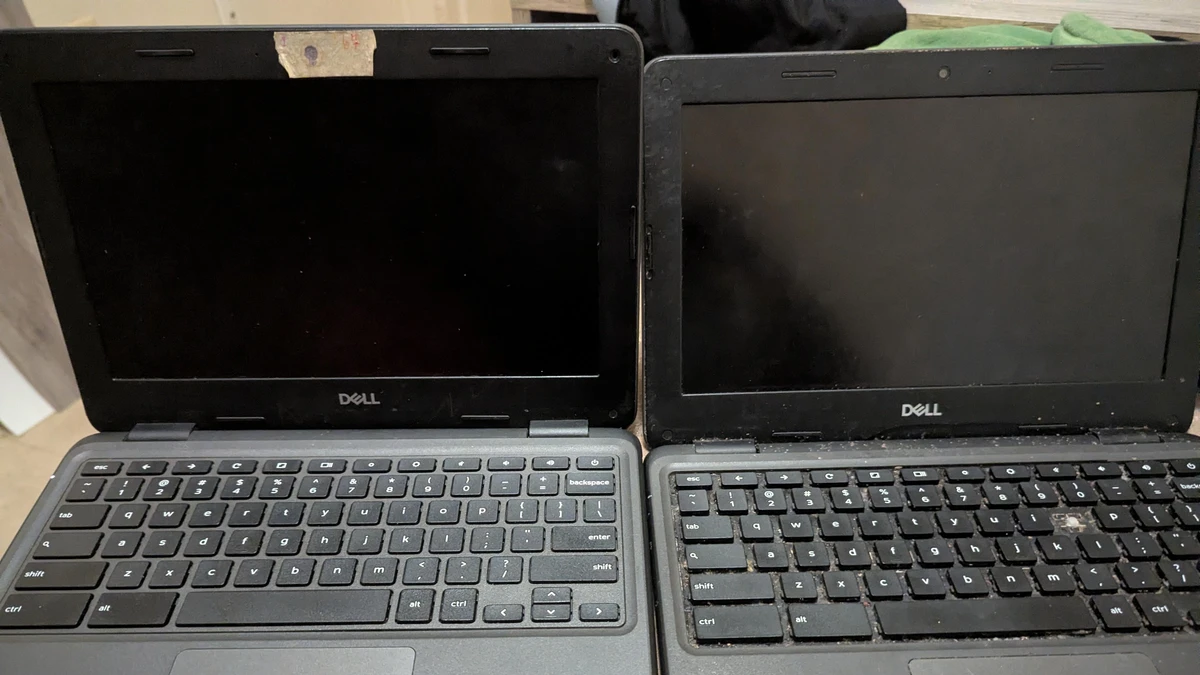
A Reddit user known as /u/Legal_Reputation_843 recently took to the popular r/mildlyinfuriating community to share a visual grievance that has since resonated with thousands of students and IT professionals alike. The post, titled simply “they DOWNGRADED our chromebooks,” features a side-by-side comparison of two devices that tells a story of aesthetic and functional regression.
Original Post via Reddit (r/mildlyinfuriating): “they DOWNGRADED our chromebooks”
The image captures a sleek, modern, silver-finished Chromebook positioned next to its replacement: a chunky, matte-black unit characterized by thick “industrial” bezels and a notably more utilitarian chassis. Within hours, the post became a focal point for a wider conversation about the “enshittification” of educational technology and the bizarre logic of school procurement cycles.
The Breakdown: Why the “New” Tech Looks So Old
To the untrained eye, the new device looks like a relic, but the reality of school IT logistics is often more complex than just “buying the newest thing.” Here is a breakdown of what is likely happening behind the scenes of this viral hardware swap:
- The Ruggedization Trade-off: Schools frequently prioritize “ruggedized” models—devices built with reinforced corners and spill-resistant keyboards—over sleek consumer aesthetics. These “tank-like” builds are designed to survive being dropped in hallways but often use older, bulkier chassis designs.
- The AUE (Auto Update Expiration) Factor: Google sets a hard “death date” for every Chromebook model, after which it no longer receives security updates. A school might replace a beautiful, fast laptop simply because its software support has expired, even if the replacement feels like a physical downgrade.
- Bulk Procurement Tiers: Educational institutions buy in massive quantities. A district might have previously secured a deal on a “premium” tier model that was being phased out, only to be forced into a “budget” tier model for the next five-year contract due to rising costs or supply chain shifts.
- Display Disparities: The viral photo highlights a shift from what appears to be a slim-bezel display to a much smaller screen surrounded by thick plastic. This often indicates a move from an IPS panel (better colors and viewing angles) to a cheaper TN panel, which saves the district money but ruins the user experience.
The Technical Mechanics of School Tech Cycles
The frustration expressed by /u/Legal_Reputation_843 is a symptom of the “1:1 Device” movement that has swept across North American and European school districts. In these programs, every student is issued a laptop, creating a logistical nightmare for IT departments who must manage thousands of identical units.
When a school district prepares for a refresh, they rarely look at the “cool factor” of a device. Instead, they look at the “Total Cost of Ownership” (TCO). This includes the initial price, the cost of replacement parts like screens and batteries, and the ease of repair. The “chunky” Chromebook seen in the viral post is likely a model where the keyboard can be swapped in under two minutes, whereas the sleeker model might require a full teardown.
Furthermore, the hardware inside these devices often remains stagnant. A Chromebook from 2021 and one from 2024 might both run on an Intel Celeron or a basic MediaTek processor. If the performance is identical but the new shell is uglier and more durable, the school board considers it a win, while the student—who has to carry the “brick” in their backpack—feels the sting of a downgrade.
“The Internet Reacts”: Community Perspective
The Reddit thread quickly became a meeting ground for disgruntled students, weary teachers, and cynical IT administrators. The comments section provides a fascinating look at the varied perspectives on why school tech often feels like it’s moving backward.
One user, claiming to work in school IT, offered a blunt explanation: “We don’t buy the pretty ones anymore because you guys keep breaking them. We had the sleek silver ones last year; 40% came back with cracked hinges by December. Now you get the tanks.”
Another commenter pointed out the psychological impact: “It’s actually depressing to go from a device that feels like a tool for the future to one that feels like a toy from a discount bin. It affects how much you actually want to use the thing for schoolwork.”
A third participant highlighted the financial irony: “Your school district probably paid more for those ‘rugged’ bricks than you could buy a decent refurbished MacBook for. The educational tech market is a total racket.”
Other notable reactions included:
- “The bezels on that new one are so thick you could park a car on them.”
- “I’m convinced school districts just buy whatever hardware was sitting in a warehouse since 2016.”
- “My school did this too. We went from touchscreens to non-touchscreens and they called it an ‘upgrade’ because the new ones had more RAM. I’d rather have the screen.”
Broader Resonance: The Quality Decline in Public Tools
This viral moment connects with a broader cultural anxiety regarding the quality of public and institutional goods. Whether it is the shrinking size of food packaging or the declining durability of appliances, there is a growing sense that we are paying more for less. In the context of education, this is particularly sensitive.
When students are handed equipment that feels inferior to what they used previously, it sends a subtle message about the value placed on their learning environment. While a laptop is just a tool, in a digital-first classroom, it is the primary interface through which a student engages with the world.
The “downgrade” also highlights the digital divide. Students from affluent backgrounds often have high-end MacBooks or PC gaming rigs at home, making the transition to a low-end, “ruggedized” school Chromebook even more jarring. For students who rely solely on school-issued tech, being handed a device that feels obsolete from day one can be a significant barrier to digital literacy.
Ultimately, the post by /u/Legal_Reputation_843 serves as a reminder that “new” does not always mean “better.” As school districts continue to navigate the complexities of limited budgets and the rapid obsolescence of hardware, the tension between durability and usability will only continue to grow. For now, students are left to carry their “bricks,” hoping that the next refresh cycle brings a genuine leap forward rather than another step back.