The humble cup of instant ramen has long served as the ultimate financial safety net for students, late-shift workers, and anyone looking to stretch a dollar. However, a recent viral discovery on Reddit suggests that even this “recession-proof” staple is falling victim to the aggressive corporate strategy known as shrinkflation.
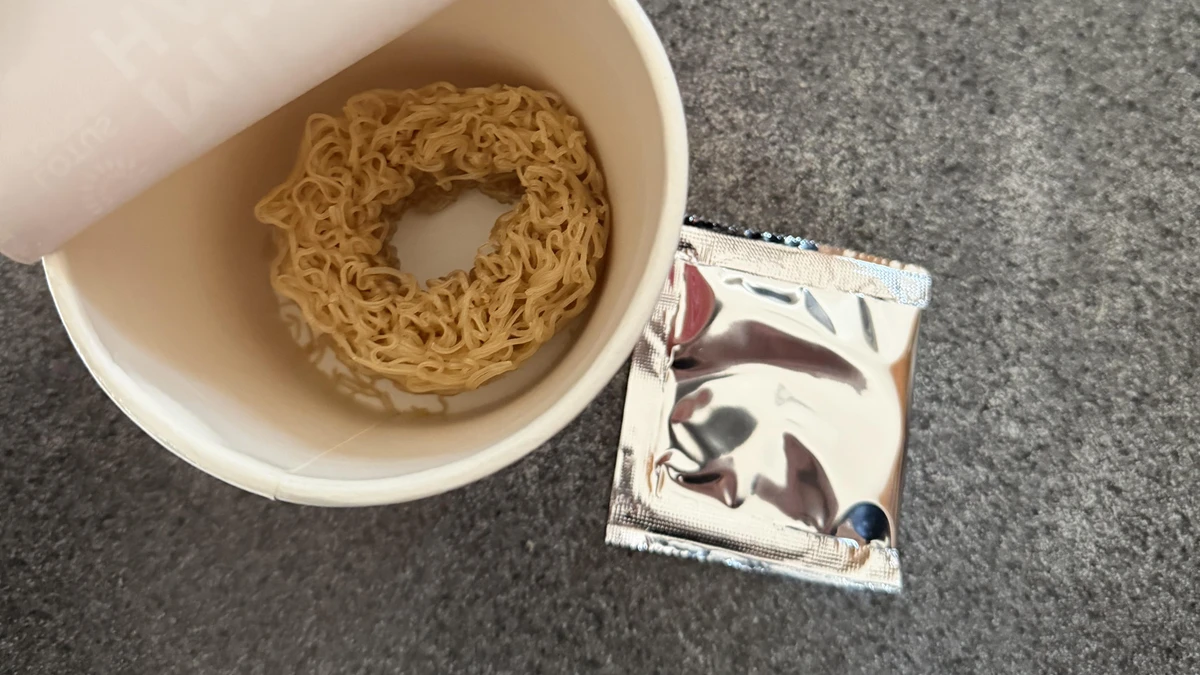
Reddit user /u/Killory_siricalzme took to the popular r/mildlyinfuriating community to share a top-down photograph of their lunch that quickly touched a nerve with thousands of shoppers. The image reveals a standard Styrofoam ramen cup where the dried noodle block appears to have “shrunk,” leaving a massive circular gap between the food and the plastic rim.
Original Post via Reddit (r/mildlyinfuriating): “Shrinkflation has hit my ramen”
The Anatomy of a Shrinking Staple
The viral post serves as a visual representation of a trend that economists call “stealth inflation.” While the price of the product often remains static on the grocery shelf, the net weight or volume of the contents is reduced to protect corporate profit margins against rising supply chain costs.
- The Visual Gap: The photograph clearly shows at least a half-inch of empty space surrounding the noodle block, which used to fit snugly against the walls of the container.
- Packaging Deception: By maintaining the original size of the outer cup, manufacturers create an optical illusion of value while delivering less actual product.
- The “Fill Line” Conflict: Users noted that while the noodles are smaller, the “fill line” for hot water remains high, often resulting in a more watery broth than consumers remember from years past.
- Weight vs. Volume: While the cup size remains consistent at eye level on a shelf, the fine print on the label often reveals a drop from the traditional 2.25 ounces to 2.0 ounces or less.
The Mechanics of the “Stealth Squeeze”
The shift in ramen portion sizes is not merely a localized glitch but part of a broader industrial pivot. Food manufacturers are currently grappling with the volatile costs of wheat, palm oil, and transportation—three pillars of the instant noodle industry.
Wheat prices have seen significant fluctuations due to geopolitical instability in major export regions, while palm oil—used to flash-fry the noodles during the dehydration process—has faced supply constraints. Rather than raising the price of a cup of noodles from $0.50 to $0.75, which might trigger immediate consumer pushback, brands often choose to shave off five to ten grams of the product.
This strategy relies on the “threshold of perception.” Most consumers will not notice a 10% reduction in weight unless they happen to look straight down into the cup before adding water. For high-volume items like ramen, where millions of units are sold daily, these tiny reductions result in massive savings for the manufacturer while the consumer pays the same “value” price for a less filling meal.
The Internet Reacts: “The Air is Getting Expensive”
The Reddit thread quickly transformed into a town hall for frustrated shoppers sharing their own “shrinkflation” horror stories. The sentiment ranged from witty resignation to genuine anger over the rising cost of living.
“I remember when the noodles were so tight in the cup you had to poke them with a fork just to get the water to go down,” commented one user, whose remark gained thousands of upvotes. “Now, they’re just rattling around in there like a loose tooth.”
Another netizen pointed out the irony of the situation: “Ramen was the last bastion of the ‘broke’ diet. If we can’t even afford the full block of noodles anymore, what is left? We are literally paying for decorated air at this point.”
A third commenter shared a more technical observation: “It’s not just the noodles. Look at the seasoning packets. They used to be full; now they are half-empty and the salt content is higher to mask the fact that there are fewer dehydrated veggies.”
Community Verification and Consumer Skepticism
Within the r/mildlyinfuriating community, some users played devil’s advocate, suggesting that the noodle block might have simply shifted during shipping or that the “expansion” during cooking compensates for the initial dry size. However, veteran shoppers were quick to debunk this with side-by-side comparisons of older packaging.
Online sleuths have begun tracking these changes across various brands, noting that even premium ramen brands are following the lead of budget labels. The consensus among the digital community is that the “quality-to-price ratio” of convenience foods is at an all-time low.
This skepticism has birthed entire sub-communities dedicated to “Shrinkflation Watch,” where users post photos of chocolate bars with wider gaps between segments, rolls of toilet paper with larger cardboard tubes, and cereal boxes that have become noticeably thinner when viewed from the side.
The Broader Economic Resonance
This viral moment resonates because it reflects a global reality. In the United States, the Consumer Price Index (CPI) has consistently shown that food-at-home prices are a major driver of inflation. In the UK, the “Cost of Living Crisis” has seen similar outcries over “skimpflation”—where manufacturers not only reduce the size but swap out high-quality ingredients for cheaper alternatives.
The psychological impact of shrinkflation is often cited by consumer advocates as being more damaging than price hikes. It erodes brand trust. When a consumer opens a package to find it significantly emptier than expected, it creates a sense of being “tricked” rather than simply paying more for a commodity.
For the millions of people who rely on instant noodles as a primary source of calories during lean times, a 10% or 15% reduction in portion size isn’t just “mildly infuriating”—it is a tangible hit to their daily nutrition and household budget. As the Reddit post continues to circulate, it stands as a stark visual reminder that in the modern economy, even the most basic comforts are being trimmed at the edges.