For international travelers who visited India a decade ago, memories of daily navigation often revolved around specific logistical hurdles: hunting down functioning ATMs with crisp paper notes, haggling over malfunctioning auto-rickshaw meters, and standing in winding, humid queues for intercity train tickets.
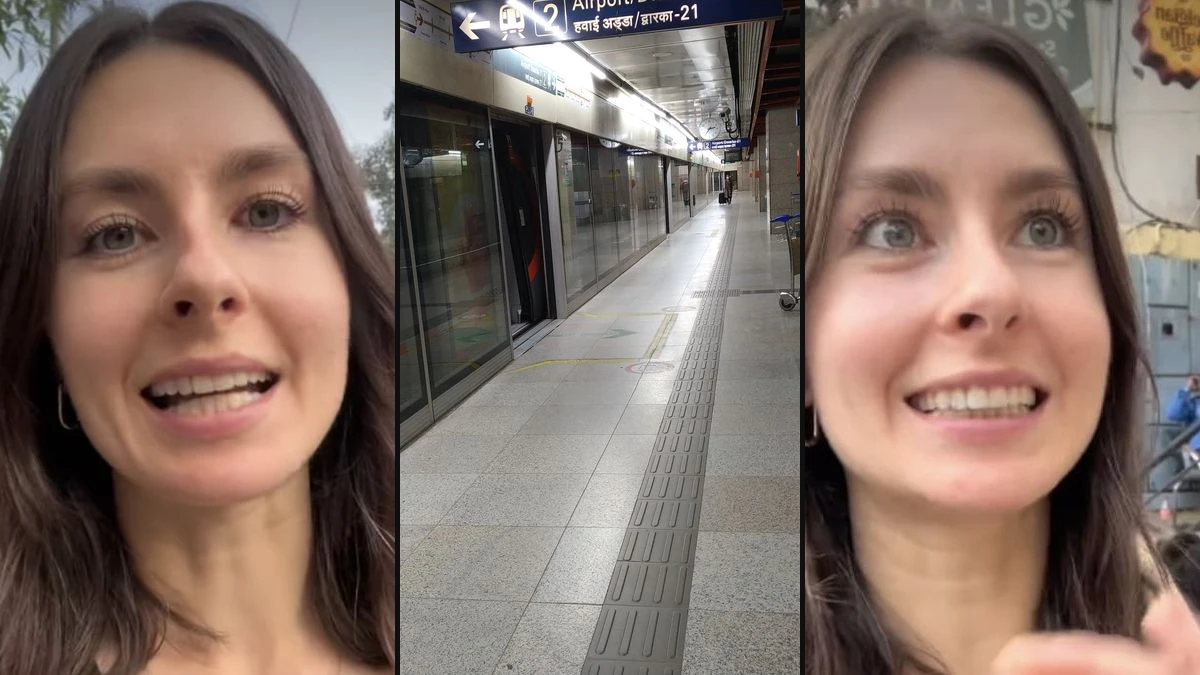
When Polish fashion model and digital content creator Dominika Patalas-Kalra (@domipatalas) reflected on her personal decade-long journey living in and traveling across India, her candid video walkthrough struck a massive nerve across both domestic and international audiences.
In her viral reel, Dominika marveled at the dramatic transformation of India’s urban ecosystem over the past ten years. “When I first arrived in India 10 years ago, everything ran on paper cash, coins, and long waits,” she observed. “Today, even the humblest roadside chaiwala sitting under a banyan tree has a UPI QR code stand. You buy a ₹10 cup of tea, scan it with your phone, the soundbox speaks out confirmation, and you walk away in three seconds. You can order groceries or medicine, and it arrives at your door in under ten minutes.”
The Digital Leap in Hard Numbers
Dominika’s anecdotal impressions are backed by staggering macroeconomic and fintech data that have made India the undisputed global frontrunner in real-time retail digital payments:
- UPI Volume & Value: According to official data from the National Payments Corporation of India (NPCI), the Unified Payments Interface routinely processes over 15 billion transactions every single month, settling in excess of ₹20.6 lakh crore ($245 billion USD).
- Global Market Dominance: India accounts for nearly 46% of all global real-time digital payment transactions, easily outstripping the combined volumes of China, the United States, the United Kingdom, and the European Union combined.
- The Voice Soundbox Phenomenon: Over 10 million smart audio soundboxes (pioneered by Paytm, PhonePe, and Google Pay) now sit on Indian countertops. For a monthly subscription fee of roughly ₹100 to ₹125, micro-vendors receive instantaneous vocal audio confirmations in their regional language, eliminating the risk of fake payment screenshots or manual SMS checking.
- Transit & Infrastructure Expansion: Over the same 10-year span, the Delhi Metro expanded its operational footprint from roughly 190 km to over 393 km across 288 stations, integrating contactless mobile QR ticketing, automated train operation (ATO), and high-speed airport express corridors.
- National Highway FASTag Automation: Electronic toll collection via RFID-enabled FASTag transitioned India’s highway toll plazas from 8-to-12-minute physical cash-collection bottlenecks in 2014 to an average processing time of under 47 seconds today.
The Community Skepticism & Verification Saga
Despite the evident factual basis of her video, the reel quickly became a battleground in the comments section. While thousands of viewers resonated with her observations, some detractors cynical of viral travel praise accused her of creating “unpaid government PR” or ignoring persistent civic challenges:
“Whenever a foreigner praises India, people immediately assume it’s sponsored,” commented one netizen. “Yes, we still have pollution and broken footpaths, but acting like digital payments haven’t transformed the working class is pure cynicism.”
Others pointed out the stark juxtaposition between hyper-modern digital convenience and traditional infrastructure issues, such as monsoon waterlogging and traffic gridlock:
“It’s amazing that a street cart has a QR code, but what happens when the road in front of the cart is flooded knee-deep?” asked another skeptic.
Refusing to let critics dismiss her lived experience, Dominika posted a spirited rebuttal clarifying her background and decade-long relationship with India:
“I have lived here for ten continuous years. I am married into an Indian family. I am not a tourist who landed yesterday for a three-day Golden Triangle package tour,” Dominika stated firmly. “I remember vividly what it was like trying to pay an auto-rickshaw driver in 2014 when you had a ₹500 note and he had zero change. I remember standing in ATM lines during demonetization. I have witnessed this digital revolution unfold day by day with my own eyes. Acknowledging incredible technological progress does not mean denying civic problems, but giving credit where it is due is simply being honest.”
Non-Resident Indians (NRIs) living in Western nations quickly jumped into the discussion to validate her contrast, sharing their own cultural reverse-shock:
- US Banking Friction: Tech workers in Silicon Valley pointed out that splitting a restaurant bill in America still often requires Venmo, Zelle, or manual credit card card-swiping, with basic peer-to-peer wire transfers taking 1 to 3 business days via the antiquated Automated Clearing House (ACH) network.
- European Paper Culture: German and Austrian travelers noted that major cities like Berlin and Frankfurt still heavily feature “Nur Barzahlung” (cash only) signs at cafes and bakeries, making India feel decades ahead in retail financial convenience.
The Technical Mechanics: Why India’s Open Rail Architecture Won
To understand why India leapfrogged Western nations in fintech, industry analysts point to the unique foundational architecture of the India Stack:
- Open Protocol vs. Walled Gardens: In the West and China, digital payments evolved inside closed corporate ecosystems—Apple Pay requires Apple hardware, while WeChat Pay and Alipay operate as proprietary walled gardens. India’s NPCI designed UPI as an open, interoperable protocol. A merchant using an ICICI Bank QR code can receive instant funds from a customer using Google Pay, PhonePe, Paytm, or BHIM linked to a state cooperative bank.
- Zero-Merchant-Discount-Rate (Zero-MDR): While US and European credit card companies impose a 1.5% to 3.5% interchange fee on every retail swipe—eating into tiny profit margins—the Indian government mandated zero merchant discount rates on basic UPI P2M (peer-to-merchant) transactions. This single policy decision removed the barrier that kept small vegetable carts, cobblers, and roadside tea stalls from accepting cashless payments.
- Hyper-Local Dark Stores & Quick Commerce: Western grocery delivery services like Instacart or Gorillas rely on gig workers roaming supermarket aisles, resulting in high fees and hour-long delivery windows. In Indian metros, platforms like Blinkit, Zepto, and Swiggy Instamart engineered high-density urban micro-warehouses (dark stores) within a 2 km radius of dense residential clusters, enabling packing in 2.5 minutes and doorstep delivery in under 10 minutes.
The Broader Cultural Resonance: Financial Dignity for the Informal Economy
Beyond the sheer speed and convenience, Dominika’s viral observation highlights a profound socioeconomic shift: the financial inclusion and dignity of India’s informal workforce.
A decade ago, street vendors were largely invisible to the formal banking system, forced to turn to predatory local moneylenders charging extortionate interest rates of 10% to 20% per month because they lacked a credit history. Today, every micro-transaction processed through a roadside QR code creates an immutable, verifiable digital footprint. Micro-lending platforms and public sector banks can assess cash flow algorithms and issue low-interest working capital loans to roadside businesses without requiring physical collateral.
Dominika’s viral reel wasn’t just another travel reflection—it captured the essence of a society that skipped desktop computers and credit card terminals entirely, leaping directly into an ultra-fast, smartphone-first digital economy that now sets the global benchmark for modern daily convenience.