For the vast majority of Corporate India, the arrival of Diwali signals an inevitable, deeply predictable workplace ritual: a company-wide email extolling the virtue of dedication, accompanied by a branded stainless-steel mug, an eco-friendly diary, a cellophane-wrapped basket of almonds, or the immortal, perpetually regifted yellow carton of Soan Papdi.
In the industrial corridors of Panchkula, Haryana, however, one homegrown pharmaceutical entrepreneur has systematically dismantled the corporate gifting playbook.
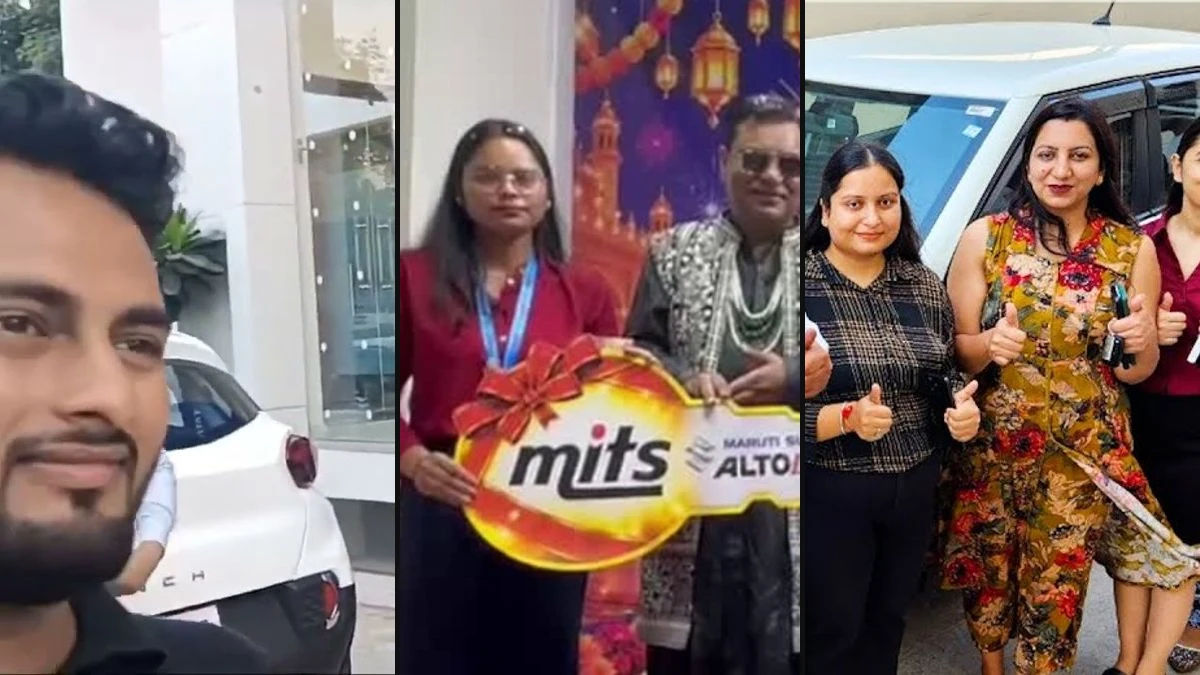
Ahead of the Festival of Lights, M.K. Bhatia, founder and chairman of MITS Group of Companies (including Mits Healthcare Pvt Ltd), orchestrated one of the most extravagant employee reward ceremonies in recent commercial history. Rather than dispersing nominal festive tokens, Bhatia surprised his workforce by distributing 51 brand-new cars and SUVs—including Kia Sonets, Tata Punches, Mahindra Scorpios, and Maruti Suzuki Alto hatchbacks—complete with factory ribbons, ceremonial oversized keys, and an exuberant vehicle rally through the streets of Chandigarh and Panchkula.
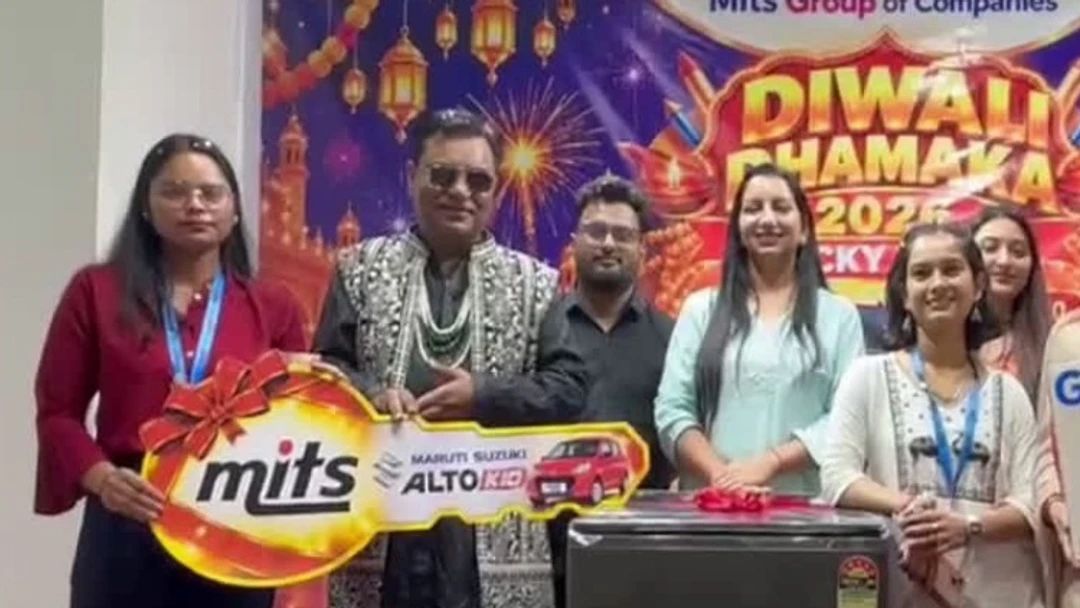
What set the internet ablaze, however, was not merely the sheer volume of four-wheelers rolling out of local dealerships. It was the uncompromisingly egalitarian philosophy governing who received them. In addition to high-billing corporate sales managers like Nitin Negi, Nirmal, Venus, and Gurveer, the recipients included office peons, packaging line assistants, security guards, and billing clerks who had demonstrated steadfast commitment to the firm.
“People often ask me why I spend millions buying cars for employees instead of putting the money into fixed marketing or retaining it in corporate accounts,” Bhatia told reporters while flanked by his company’s Chief Executive Officer, Shilpa Chandel. “My answer is simple: they are not my laborers or subordinates. They are my rockstars, my celebrities. When a business scales, the fruits of prosperity cannot remain trapped on a spreadsheet. They must physically drive into the employee’s courtyard.”
The Evolution: Building an Automotive Tradition
While the 51-car handover created an unprecedented viral sensation, the gesture was not an isolated impulse. It was the culmination of a multi-year workplace philosophy that Bhatia has nurtured across several consecutive festive seasons:
- The 2023 Genesis: The tradition began quietly when MITS Healthcare rewarded 12 key staff members with Tata Punch compact SUVs. Most remarkably, one of those initial vehicles was presented to an office helper who had spent over five years commuting to the factory across unpredictable bus schedules.
- The 2024 Expansion: Building on the goodwill and organizational stability generated by the first round, the company expanded the fleet giveaway to 15 vehicles, rewarding long-serving warehouse managers and medical dispatch supervisors.
- The 2025 “Half-Century” Milestone: Surpassing all expectations, Bhatia announced the historic 51-vehicle initiative. After handing over keys at authorized dealership showrooms in Zirakpur and Chandigarh, the company staged an organized “Car Gift Rally.” A two-kilometer convoy of identical brand-new cars, horns sounding and hazard lights flashing, snaked along the Himalayan Expressway into the Panchkula industrial area, drawing crowds of astonished onlookers.
- The Inclusive Lucky Draws: Recognizing that high-performance sales metrics naturally favor front-line executives, the leadership established a transparent, tenure-based lucky draw system. Any employee with 18 months or more of continuous service—regardless of rank, department, or educational pedigree—became eligible to win brand-new Maruti Suzuki Alto K10 commuters and Kia Sonet sub-compact SUVs.
The Math: A Multi-Crore Fleet Downpour
In an era where multinational IT conglomerates and corporate consultancies justify austerity budgets with boilerplate memos on macroeconomic headwinds, the sheer financial scale of MITS Healthcare’s festive expenditure represents a staggering capital deployment for a mid-market private enterprise.
A granular breakdown of the automotive fleet illuminates the economic reality behind the viral celebration:
- The Fleet Composition & Specifications:
- Sub-Compact SUVs (Kia Sonet & Tata Punch): Equipped with modern safety features (including 6 airbags, electronic stability control, and high ground clearance suitable for semi-urban distributor visits), these vehicles retail between ₹8.5 lakh and ₹14.5 lakh on-road. They were allocated to senior operational stalwarts and high-performance sales leaders who log tens of thousands of kilometers annually managing regional chemist networks.
- Full-Sized Workhorses (Mahindra Scorpio-N & Classic): Valued between ₹16.0 lakh and ₹18.5 lakh on-road, these rugged ladder-frame utility vehicles were presented to regional supply chain directors overseeing interstate warehousing logistics across Punjab, Haryana, Himachal Pradesh, and Rajasthan.
- High-Efficiency Commuters (Maruti Suzuki Alto K10): Valued at approximately ₹4.8 lakh to ₹5.5 lakh on-road, these nimble 1.0-liter hatchbacks (boasting fuel efficiency figures exceeding 24 km/liter) were awarded to office assistants, billing staff, and warehouse packing crew members who had previously relied on public transport.
- Estimated Capital Expenditure: Conservative market calculations place the aggregate on-road value of the 51-vehicle convoy between ₹4.5 crore and ₹6.2 crore ($540,000 to $745,000 USD).
- The Industry Benchmark Comparison: According to corporate gifting indexes published by Indian human resources consultancies, the median Diwali spend per employee among mid-tier Indian enterprises ranges between ₹750 and ₹2,500. Bhatia’s automotive giveaway eclipsed the standard corporate gifting baseline by more than 3,000 times per rewarded staff member.
The logistical coordination required weeks of advance preparation with local automotive dealership networks. When the handover day arrived, entire dealership parking concourses were completely occupied by rows of freshly polished white, silver, and cherry-red vehicles, each fitted with oversized silk bonnets, customized dealership number plates, and gift hampers placed inside the passenger seats.
The Skepticism Saga: Public Relations Stunt or Genuine Ownership?
Whenever an Indian business owner makes national headlines by gifting automobiles, cynical reactions on professional platforms like LinkedIn, X, and Reddit are virtually guaranteed. Following the initial viral surge of MITS Healthcare’s handover clips, comment sections filled with pointed, skeptical questions: Is this an outright gift or an elaborate financing trap? Are the vehicles registered in the company’s name? Do the workers have to bear crushing monthly EMI burdens?
Online discourse in communities like r/IndianWorkplace and r/antiwork frequently dissects corporate giveaways, recalling instances where companies handed over vehicle keys for promotional photo opportunities only to deduct monthly leasing payments directly from the employee’s net paycheck, or tying staff to suffocating five-year non-compete agreements with heavy exit penalties.
However, investigations by regional news syndicates—including ground reports by ETV Bharat Haryana, DNA India, and Zee Delhi-NCR—uncovered the structural specifics of Bhatia’s framework:
- Clear Individual Registration and Asset Title: Unlike corporate leasing schemes where the enterprise retains primary ownership on the registration certificate (RC), the vehicles are registered directly in the individual names of the employees. The worker holds the legal title from day one.
- Upfront Capital Settlement: The company absorbed the entire on-road down payment, statutory state road taxes, registration fees, and initial comprehensive insurance premiums upfront from corporate operational reserves.
- Tenure-Linked Retention Support: For financed balances, the company structured dedicated corporate allowance stipends tied to a modest 18-month to 36-month operational tenure. If an employee remains with the enterprise through the agreed benchmark, the company clears the financing installments in full without touching their base salary structure.
- No Financial Deduction from Base Wages: Multiple employees confirmed to regional journalists that their baseline take-home earnings remained 100% untouched, ensuring that the vehicle represented a genuine asset rather than a hidden liability.
“When I joined as an office assistant four years ago, I commuted on an old second-hand motorcycle that routinely broke down during the monsoon,” shared one support worker who received an Alto K10 in the tenure draw. “I never imagined my family would own a brand-new four-wheeler with zero kilometers on the odometer. Sir called us onto the stage, handed over the key with sweets, and told us this was our family’s blessing for Diwali. My parents wept when I drove it home.”
The Strategic Mechanics: Why Tier-2 Gifting Crushes Metro MNC Perks
Behind the emotional speeches and viral celebration lies a masterclass in localized corporate retention mechanics. While Fortune 500 tech firms in Bengaluru and Gurgaon burn millions on external recruitment agencies, executive search retainers, and generic employer branding campaigns, homegrown enterprises in industrial clusters like Panchkula, Baddi, and Mohali face a distinctly different talent battle.
In the Indian pharmaceutical manufacturing and distribution landscape, specialized sales representatives, packaging coordinators, and procurement clerks operate in a hyper-competitive, high-turnover environment. Workers routinely defect to competing formulations laboratories for marginal salary hikes of ₹2,000 to ₹4,000 per month.
By converting liquid capital into permanent, tangible mobility assets, MITS Healthcare solves several critical business dilemmas at once:
- Zero-Turnover Loyalty Moats: An employee who has been gifted a brand-new vehicle that elevates their entire family’s social standing in their home village or township is virtually insulated against lateral poaching. Turnover rates among the firm’s core operational cadres have plummeted to near zero.
- Legitimate Fiscal Depreciation: Under Section 32 of the Indian Income Tax Act, corporate entities can claim legitimate depreciation write-offs (typically 15% to 30%) on commercial fleet investments and structured employee welfare assets, creating substantial tax efficiency compared to dispersing simple cash bonuses that are immediately eaten up by personal income tax brackets.
- Organic Recruitment Magnetism: The viral footage of the 51-car rally through Chandigarh generated tens of millions of views across YouTube, Instagram, and local television. Without spending a single rupee on recruitment advertising, MITS Healthcare receives hundreds of qualified resumes weekly from professionals across Punjab, Haryana, and Himachal Pradesh seeking employment with an owner who visibly rewards contribution.
Generational Resonance: From Two Wheels to Four
In modern India, vehicle ownership remains a profound emotional threshold. In tier-2 and tier-3 cities, transitioning a family from balancing four people on a 110cc scooter in torrential rain or winter fog to traveling inside an air-conditioned, safety-rated cabin is not merely a lifestyle update—it is a generational socioeconomic leap.
As footage of the vehicle convoy circulated across social networks, the contrast between Bhatia’s old-school industrial generosity and the detached corporate culture of modern white-collar conglomerates resonated deeply with everyday working professionals.
While corporate executives in high-rise tech parks navigate endless restructuring memos, return-to-office mandates, and hollow “wellness webinars,” a manufacturing founder in Haryana demonstrated that the ancient spirit of Diwali—sharing newfound prosperity directly with those whose labor generated it—remains the most potent workplace motivator in the country.