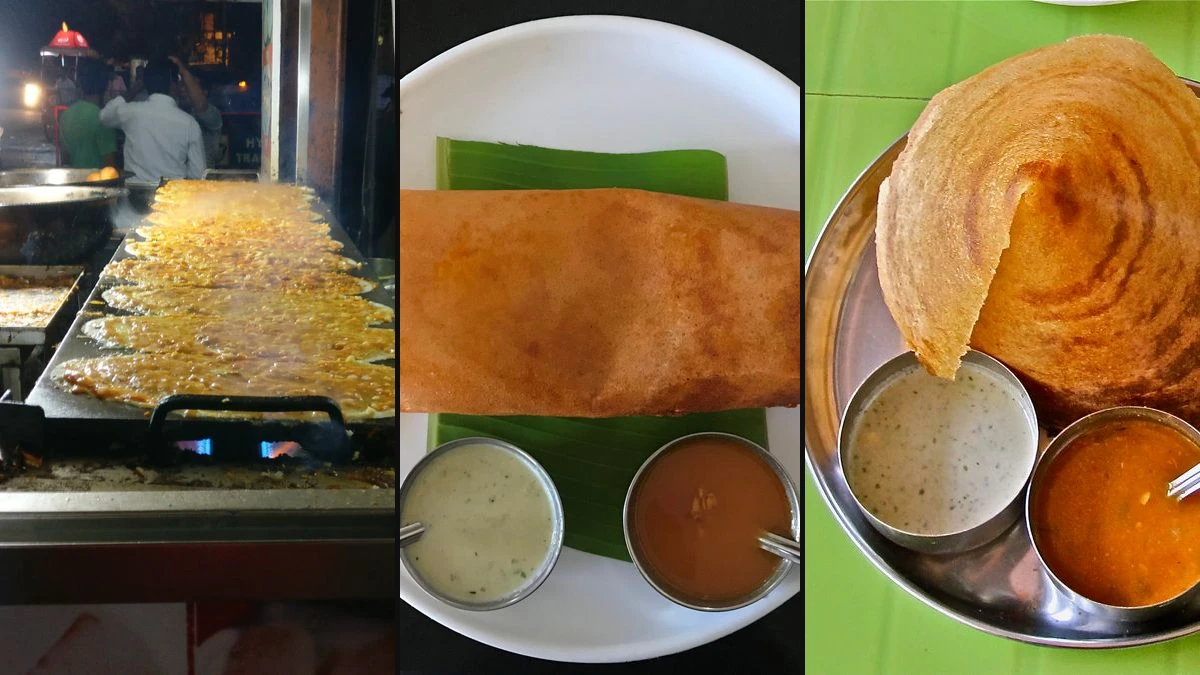
When an etiquette instructor in Maharashtra sat down before a camera to demonstrate the “refined” and “graceful” way to consume a classic South Indian masala dosa, he believed he was imparting a masterclass in professional polish. Armed with polished stainless steel cutlery, he meticulously folded the crisp golden crepe into an origami parcel, sawed through its delicate fermented shell, and hoisted a miniature morsel on a dessert spoon.
Within hours of being broadcast to social media, the demonstration triggered an overwhelming wave of collective online exasperation.
Instead of applauding the performance, millions of food lovers, South Indian culinary purists, and everyday netizens united in disbelief. The controversy escalated when the academy shared follow-up footage showcasing a dedicated “Dosa Etiquette Session for Doctors,” arguing that medical professionals must project boardroom refinement even when confronting street-style comfort food.
The Viral Spark: From Etiquette Tutorial to Internet Punchline
The controversy originated from Western Wings Spoken English and Personality Development Academy, an institute based in Nagpur founded by corporate grooming trainer Amol Pangul. Posting across Instagram handle @westernwingsspokenenglish, the academy framed cutlery mastery as a prerequisite for social mobility:
“Using a fork and spoon for dosa can make dining more hygienic, especially in restaurants where utensils are provided. Enjoy every bite neatly, confidently, and with royal elegance. Because good etiquette is not a new trend it’s a timeless tradition of graceful dining.”
In the viral demonstration, the instructor positions a fork in his left hand and a spoon in his right. Rather than tearing a bite-sized piece of the dosa with his fingers—the tactile method perfected across the Indian subcontinent over two millennia—he uses the back of the spoon to tuck the outer golden flap inwards. He then pins the rolled crepe with the fork tines and uses the spoon’s edge as an improvised saw before lifting the fragment into his mouth.
A companion video titled “Dosa Etiquette Session for Doctors” doubled down on the premise:
“In our Dosa Etiquette Session for Doctors, we’re teaching the art of enjoying every bite with a fork and spoon neatly, confidently, and gracefully. Because true professionalism goes beyond the workplace, it reflects at the dining table too!”
The clip exploded into a viral firestorm when social media commentator Manas Muduli (@manas_muduli) reshared the footage with a razor-sharp caption that captured the collective sentiment:
“When you pay ₹1,500 for a dosa at a 5-star hotel, apparently you are not allowed to eat it with your hands. Fork and spoon are compulsory! Here is the official training video on how to eat a dosa like a 5-star guest :)”
"When you pay ₹1,500 for a dosa at a 5-star hotel, apparently you are not allowed to eat it with your hands. Fork and spoon are compulsory! Here is the official training video on how to eat a dosa like a 5-star guest :)"
The Math: The ₹60 Darshini vs. The ₹1,500 Five-Star Markup
The satire struck a deeply sensitive chord because it exposed the staggering economic and psychological gulf between traditional street dining and luxury hospitality in India.
| Metric / Parameter | Iconic Bengaluru Darshini / Chennai Tiffin | Luxury Five-Star Hotel Coffee Shop |
|---|---|---|
| Typical Selling Price | ₹50 – ₹85 (e.g. Vidyarthi Bhavan, CTR) | ₹1,200 – ₹1,550 (+18% GST = ₹1,416 – ₹1,829) |
| Raw Ingredient Cost | ₹18 – ₹24 (Fermented batter, spiced aloo palya, ghee) | ₹22 – ₹28 (Organic potato portion, cold-pressed ghee) |
| Food Cost Percentage | 30% – 35% (High-volume, rapid-turnover) | 1.5% – 2.0% (Ultra-low relative to tariff) |
| Gross Markup | 2.5x to 3.5x | 60x to 75x (Over 2,400% premium) |
| Service Ambience | Standing steel counters, banana leaves, brass filter coffee | Linen tablecloths, silver-plated flatware, air conditioning |
| Dining Philosophy | High-velocity, tactile, community-driven eating by hand | Performative formality, slow service, imported cutlery etiquette |
At iconic heritage establishments like Bengaluru’s Vidyarthi Bhavan, CTR Shri Sagar, or Chennai’s Murugan Idli Shop, 100 grams of fermented rice-and-urad-dal batter cooks on a blistering cast-iron skillet in under 90 seconds. Topped with a dollop of spiced potato masala and a generous ladle of aromatic ghee, it is served on a fresh banana leaf or stainless steel plate for less than the cost of a municipal parking ticket.
In contrast, at luxury hotel coffee shops in Mumbai, Delhi, or Bengaluru, ordering that identical preparation yields a bill approaching ₹1,800 once luxury taxes and discretionary service charges are factored in.
Commentators noted that the sheer absurdity of paying a 2,400% markup creates a bizarre psychological trap: having paid a king’s ransom for peasant comfort food, diners are subtly coerced into pretending that the dish requires foreign surgical instruments to justify its luxury pricing.
The Community Skepticism & The Great Cutlery Roast
Social media users wasted no time dismantling both the premise of the video and the technical execution of the etiquette coach.
-
The Surgical Irony: Physicians and surgeons flooded medical WhatsApp networks and X threads with biting responses. “I spend six hours in the operating theater holding micro-forceps, tenotomy scissors, and cautery needles with sterile latex gloves,” wrote one orthopedic surgeon from Chennai. “When I sit down for lunch, I scrub my hands thoroughly with soap and use my fingers. We don’t need a medical-grade scalpel to biopsy a masala dosa.”
-
The Faux Pas of Cutlery Itself: Formal European dining scholars pointed out that the instructor was violating the very Western table manners he claimed to champion. In formal Continental dining, holding a fork in one hand and a dessert spoon in the other is strictly reserved for twirling long pasta in casual trattorias—not for cutting solid foods. True formal European cutlery demands a table knife in the dominant hand and a fork in the non-dominant hand. Using a blunt spoon to chop food on a ceramic plate is considered an amateurish blunder in European etiquette schools.
-
The Colonial Hangover Critique: Thousands of comments echoed a shared cultural frustration: “Angrez chale gaye, lekin table manners chhod gaye” (The British left, but left behind their etiquette complexes). Netizens questioned why Indian professionals must abandon their own refined culinary customs to gain arbitrary validation from outdated Western finishing-school doctrines.
Culinary Physics: Why Steel Cutlery Destroys a Dosa
Beyond cultural sentiment, culinary scientists and chefs pointed out that eating a dosa with metal cutlery is mechanically and gastronomically counterproductive.
+---------------------------------------------------------------------------------+
|                        THE MECHANICS OF DOSA TEXTURE                            |
+---------------------------------------------------------------------------------+
|                                                                                 |
|   1. CRISP OUTER CRUST (Micro-alveoli created by 12hr Lacto-fermentation)       |
|      -------------------------------------------------------------------        |
|      When metal cutlery presses down, blunt pressure crushes the brittle        |
|      crust into jagged flakes, separating the shell from the filling.           |
|                                                                                 |
|   2. TENDER INNER SPONGE & MOIST POTATO PALYA                                   |
|      -------------------------------------------------------------------        |
|      Sawing with a spoon squashes the steam-cooked potato masala, turning       |
|      a light, fluffy filling into dense, compacted paste.                       |
|                                                                                 |
|   3. FINGERTIP PRECISION (The Natural Culinary Tongs)                           |
|      -------------------------------------------------------------------        |
|      Human fingers exert variable micrometric pressure, pinching both crisp     |
|      exterior and tender filling together in a balanced ratio, then scooping    |
|      coconut chutney without spilling a single drop.                            |
|                                                                                 |
+---------------------------------------------------------------------------------+
A properly made South Indian dosa is a triumph of fermentation chemistry:
- The Maillard Network: During overnight fermentation, Leuconostoc mesenteroides and wild yeasts digest starches into lactic acid and carbon dioxide. When spread across an iron tawa heated to 180°C, the moisture instantly flashes into steam, leaving behind a paper-thin, crisp lattice.
- The Cutlery Disaster: Because the outer shell is brittle and glassy while the spiced potato filling is soft and moist, pressing down with a blunt metal spoon applies downward compressive force without shearing. The result is shattered dry shards on the plate and squashed mashed potato oozing out sideways.
- The Somatosensory Advantage: Fingers act as intuitive, sensory-controlled tweezers. They pinch both the crunchy exterior and the soft interior simultaneously, creating a sealed pocket that holds chutney and sambar without fracturing the structure.
The Science of Tactile Eating: Why Your Gut Needs Your Hands
The viral debate also revived interest in the neurobiology of touch and human digestion. Eating with hands is not an absence of etiquette; it is an advanced sensory process recognized by both modern physiology and ancient medicine.
-
Pre-Digestive Sensory Priming: The human hand contains the highest density of nerve endings anywhere on the human body, with between 2,500 and 3,000 tactile mechanoreceptors per square centimeter on the fingertips. When your fingers touch warm food, thermoreceptors immediately transmit data regarding temperature, texture, and moisture directly to the insular cortex of the brain. This tactile signal triggers the autonomic nervous system to stimulate salivary amylase production, stomach acid release, and pancreatic enzymes before the food even enters the oral cavity. Steel cutlery acts as a sensory insulator, depriving the digestive tract of this crucial preparatory phase.
-
The Ayurvedic Element Balance: Classical Ayurvedic treatises, including the Charaka Samhita, emphasize that mindful eating (Anna Sevana) is rooted in the five fingers, each corresponding to one of the five primordial elements (Pancha Mahabhuta):
- Thumb: Fire (Agni) – Ignites digestive warmth.
- Index Finger: Air (Vayu) – Facilitates breath and movement.
- Middle Finger: Space (Akash) – Creates mental room for nourishment.
- Ring Finger: Earth (Prithvi) – Grounds physical sustenance.
- Little Finger: Water (Jala) – Regulates fluids and taste.
Gathering morsels using the five fingertips activates subtle energy pathways, encouraging slower chewing, portion control, and mindful consumption.
The Cultural Verdict: The Return of Confident Heritage
The viral saga of the Nagpur etiquette coach marks an important cultural turning point in modern India. A generation ago, upwardly mobile professionals might have felt self-conscious dining with their hands in five-star hotel lobbies or corporate banquets, fearing judgment from peers steeped in convent-school or colonial-era etiquette.
Today, that dynamic has completely reversed. Modern Indian diners possess deep cultural self-assurance. They recognize that real elegance does not mean clumsily dismembering an indigenous delicacy with foreign utensils simply because a chandelier hangs overhead.
Even the world’s most acclaimed fine-dining Indian kitchens—from Indian Accent in New Delhi to Tresind Studio in Dubai and Gaggan in Bangkok—now curate courses specifically designed to be eaten with bare hands. Finger bowls infused with rose water and warm lemon towels are proudly provided because master chefs understand that texture is half the flavor.
As one viral commenter summarized to thunderous agreement: “Eat pizza with your hands. Eat sushi with your hands or chopsticks. Eat tacos with your hands. And above all, eat your hot, ghee-roasted masala dosa with your hands. True royal elegance is knowing how to enjoy your culture without feeling inferior.”