The frantic energy of a dinner rush is a familiar rhythm for anyone in the service industry, but for one server, the night ended with a gut-punch realization rather than a hard-earned tip. A viral post on Reddit has captured the collective frustration of thousands after a group of customers allegedly used a deceptive prop bill to “pay” for their meal before walking out of the establishment.
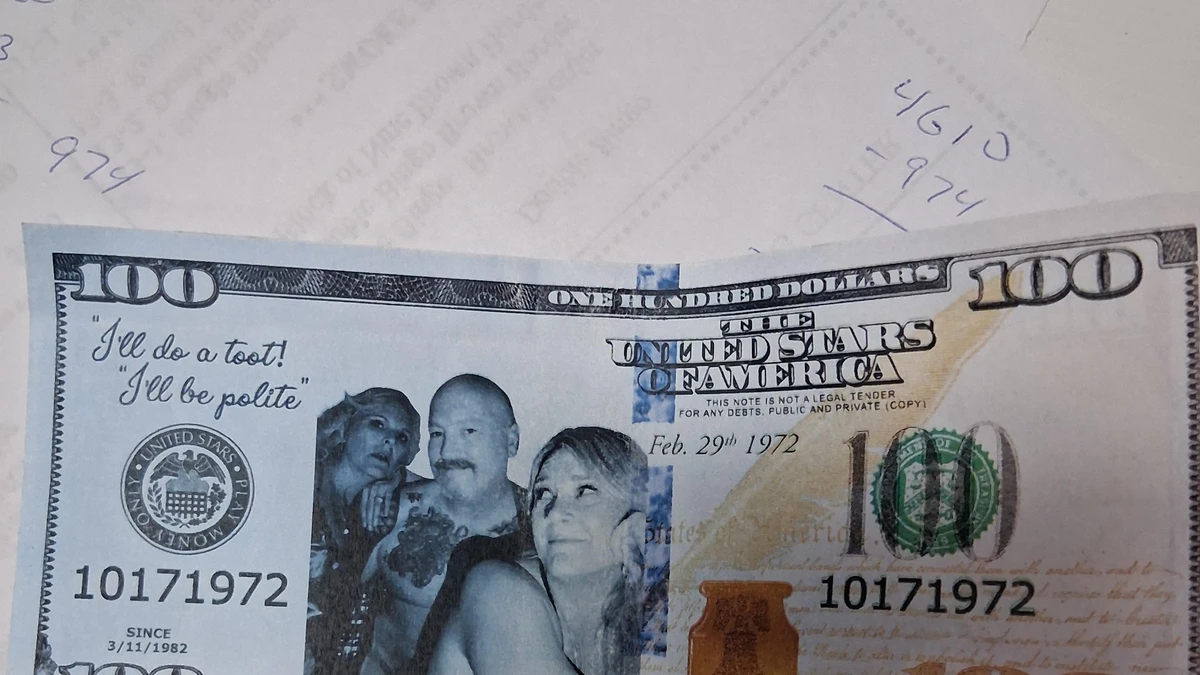
The incident, shared by Reddit user /u/taurinebug in the popular r/mildlyinfuriating community on Thursday, February 13, 2025, features a photograph of what appears at first glance to be a crisp $100 bill. However, upon closer inspection, the “currency” reveals itself as a prop, often used in film production, leaving the server with a $0 balance and a potential deficit in their nightly earnings.
Original Post via Reddit (r/mildlyinfuriating): “Customers at the restaraunt I work at left this for their bill and walked out”
The Deception Breakdown: How the Incident Unfolded
The viral image highlights a growing trend of “dine and dash” tactics that go beyond simply running out the door. By leaving a physical object that mimics currency, perpetrators often gain those crucial extra minutes needed to exit the premises before a server realizes they have been defrauded.
- The Visual Bait: The bill was folded or placed in a way that mimicked a standard cash payment, appearing authentic enough to pass a casual glance during a busy shift.
- The “Motion Picture” Disclaimer: The bill clearly features the text “For Motion Picture Use Only,” a standard legal requirement for prop money that is frequently ignored by those using it for malicious pranks or theft.
- The Timing of the Exit: The customers reportedly walked out immediately after placing the bill on the table, a calculated move to avoid the mandatory “change-making” interaction with the server.
- The Financial Impact: In many jurisdictions, servers are left to deal with the fallout of unpaid tabs, which can lead to disciplinary action or, in legally questionable scenarios, attempts by management to dock wages.
The Legal and Industrial Mechanics of Prop Money
The use of “Motion Picture Use Only” money is a gray area that often crosses into criminal territory when used to settle real-world debts. While these bills are legally sold on platforms like Amazon and eBay for photography and film, the act of using them to obtain services or goods constitutes “Theft of Services” or “Fraud.”
In the United States, the Secret Service maintains strict guidelines for prop money to ensure it cannot be easily mistaken for legal tender. Authentic props must be significantly larger or smaller than real currency (at least 125% or less than 75% of the original size) and must be one-sided. However, many manufacturers produce “high-quality” replicas that ignore these rules, leading to an influx of fake bills in the retail and hospitality sectors.
When a customer leaves fake money and exits, they are not just “pulling a prank.” They are committing a crime. In most states, “Theft of Services” is a misdemeanor for amounts under a certain threshold (often $500 or $1,000), but the use of counterfeit-style props can sometimes escalate the situation to felony forgery charges depending on the intent and the quality of the replica.
Community Skepticism and the Digital Echo Chamber
As the post climbed the ranks of Reddit’s front page, it sparked a fierce debate among netizens, ranging from heartfelt empathy to sharp skepticism. Many users who have worked in the service industry shared their own “war stories,” but a vocal segment of the community questioned the authenticity of the post itself. “The bill looks suspiciously crisp for a table that just finished a full meal,” one commenter noted, suggesting that the post might be “karma farming”—a common occurrence where users stage scenarios for social media engagement.
However, the majority of the discourse focused on the sheer audacity of the act. Long-time servers pointed out that this specific brand of deception is often more painful than a standard “dine and dash” because of the emotional “bait-and-switch” involved. One user remarked, “When someone just runs out, you know you’re being robbed. When they leave a fake $100, they are making a fool out of you. They want you to feel that five seconds of relief that the bill is covered before the realization hits.” This psychological layer of the crime—the intentional mocking of the worker—is what seemed to resonate most with the digital audience.
The Psychology of the “Prank” vs. the Reality of Labor
The fascination with this viral moment highlights a disturbing cultural disconnect regarding the “social contract.” In a functioning society, there is an unspoken agreement that services rendered will be compensated with valid currency. When a customer uses a prop bill, they are effectively dehumanizing the server. To the perpetrator, the server is not a person with rent to pay or groceries to buy, but a character in a low-stakes game where the goal is to “win” a free meal through cleverness.
Psychologically, this behavior is often categorized as a “victimless” mindset. Perpetrators often convince themselves that the “big corporation” or the “wealthy restaurant owner” will absorb the cost. They ignore the granular reality of the service industry, where an unpaid $100 bill can represent an entire shift’s worth of profit or, worse, result in a server being pressured to cover the loss out of their own pocket—a practice that, while illegal in many states under the Fair Labor Standards Act (FLSA), still persists in smaller, less-regulated establishments.
Historical Parallels: From Religious Tracts to Digital Deception
The use of deceptive “currency” in restaurants is not a new phenomenon, but its evolution mirrors the technology and social trends of the times. For decades, the “religious tract” $20 bill has been the bane of Sunday morning shifts. These are slips of paper that look like currency when folded but reveal a sermon or a religious message once opened, often accompanied by the phrase, “Disappointed? Don’t be—Jesus is the real treasure.” Much like the “Motion Picture” money, these tracts use the visual language of value to deliver a message (or a theft) that leaves the worker empty-handed.
In the mid-20th century, the “dine and dash” was often a physical feat—climbing out of bathroom windows or creating a loud distraction to slip out the front door. Today, the deception has become more sophisticated and “cleaner.” The accessibility of high-quality film props via the internet has professionalized the scam. We are seeing a shift from the “desperate run” to the “calculated fraud,” where the perpetrator remains calm, leaves a physical object to buy time, and exits with the air of a satisfied customer.
The Ripple Effect: How the Industry is Forced to Adapt
The viral nature of these incidents is more than just internet fodder; it is actively changing how restaurants operate. Much like how the “gas and go” thefts of the early 2000s led to the universal requirement of pre-paying at the pump, the rise in sophisticated dine-and-dash tactics is pushing the sit-down dining industry toward a “pay-at-order” or “card-on-file” model. We are witnessing a gradual erosion of the traditional trust-based dining experience.
Many high-end establishments are now utilizing reservation platforms that require a credit card deposit, while casual dining spots are increasingly turning to tabletop kiosks where the check must be settled before the final course is served. While these measures protect the bottom line, they also strip away the personal, hospitable nature of the dining experience. The actions of a few deceptive customers, like those featured in the Reddit post, create a “tax” on everyone else—resulting in more rigid rules, less trust, and a more sterile environment for both workers and patrons.
Ultimately, the story of /u/taurinebug is a microcosm of a larger struggle within the modern workforce. It serves as a stark reminder that behind every viral photo of a “fake bill” is a real person who just worked an eight-hour shift for a “paycheck” that turned out to be nothing more than a piece of movie paper. As the industry continues to grapple with these thefts, the conversation remains centered on a single, fundamental question: how do we protect the people who serve us from those who view their labor as a game?