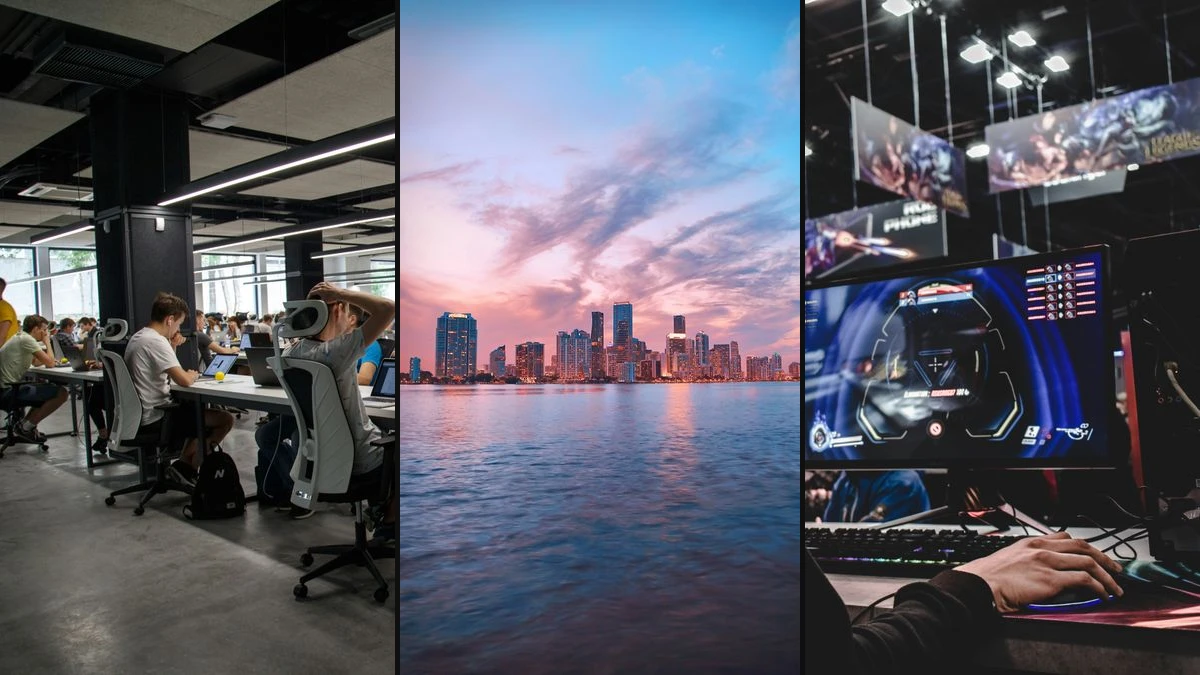
In an era dominated by corporate debates over mandatory return-to-office clampdowns, biometric attendance tracking, and 70-hour work week manifestos, one Indian executive has chosen a refreshingly unorthodox managerial tactic: closing the entire office so his staff can play video games.
On the morning of Thursday, November 19, 2026, the workstations inside Inde by ChairsCarte—a high-end interior architecture and workplace design firm based in Chennai—stood completely deserted. Keyboards were unplugged, computer monitors were powered down, and design sprint deadlines were officially paused. The reason was not a cyclone warning or an administrative bank holiday, but rather a rare pop-culture event over a decade in the making: the official worldwide release of Rockstar Games’ Grand Theft Auto VI.
Through an announcement published on the company’s official Instagram page (@indebychairscarte), founder and CEO Kishore Shanmugam announced that the firm would grant a fully paid company-wide holiday. The decree applied not only to senior leadership and full-time employees but was extended unconditionally to college interns and contract freelancers, immediately setting off a wave of viral appreciation across Instagram, LinkedIn, and X.
“Not Just Another Thursday”: The Memo That Captivated Social Media
Rather than issuing a standard, bureaucratic HR memo, Shanmugam framed the sudden day off through the lens of shared generational nostalgia and childhood memory.
"Just a day off for a game we've waited years for. We grew up with Vice City, GTA V, late-night missions, cheat codes, and Rockstar worlds that made reality disappear for a few hours. It's been 13 years. So when GTA VI finally arrives, we're not treating it like just another Thursday!"
The message struck an immediate chord because it directly acknowledged the passage of time. When Grand Theft Auto V originally hit store shelves on September 17, 2013, the current generation of young professionals—now drafting commercial blueprints and managing corporate accounts—were students sitting in school classrooms or spending evening pocket money in neighborhood cyber cafes.
The Cultural Mathematics: 13 Years and 4,800 Days of Waiting
To casual observers, halting operations for a digital entertainment launch might appear frivolous. But across gaming and tech communities, the arrival of GTA 6 represents an unprecedented cultural benchmark:
- The 4,812-Day Hiatus:
- More than 13 full calendar years elapsed between the launch of GTA V (September 2013) and GTA 6 (November 2026).
- Entire technological lifecycles—the rise of consumer 5G, four distinct console generations, and the mainstream emergence of generative AI—unfolded during the wait.
- Childhood Memory vs. Adult Reality:
- For millennials and older Gen Z professionals across India, earlier franchise titles like GTA: Vice City (2002) and GTA: San Andreas (2004) served as foundational introductions to personal computers.
- Handwritten cheat-code slips (
ASPIRINE,NUTTERTOOLS,PANZER) taped beside CRT monitors were ubiquitous fixtures of Indian households throughout the 2000s.
- Economic Scale of the Event:
- With development and marketing expenditures projected into the billions of dollars, the title’s launch disrupted normal workplace attendance worldwide, driving millions of planned and unplanned sick leaves globally.
The Psychological Genius: Why Empathy Beats the “Sick Leave” Charade
Beyond the romantic appeal of childhood nostalgia, human resource consultants and startup advisors were quick to point out the shrewd managerial pragmatism underlying Shanmugam’s decision.
Every veteran manager understands an unspoken truth of modern office dynamics: on days marked by massive cultural phenomena—whether an India-Pakistan Cricket World Cup clash or a generational gaming launch—productivity inevitably plummets. Employees routinely stage elaborate deceptions, calling in with sudden migraines, phantom food poisoning, or urgent domestic plumbing emergencies.
By preemptively granting a paid holiday, Shanmugam dismantled the adversarial dynamic between employer and employee:
- Eliminating Workplace Deceit:
- Employees were spared the indignity of drafting fabricated doctor notes or anxiously hiding online status indicators on Discord and Steam while pretending to be away from keyboard.
- Universal Inclusivity for Non-Permanent Staff:
- While traditional corporations typically restrict sudden wellness perks to salaried executives, ChairsCarte explicitly extended the holiday to interns and freelance designers—demographics that historically bear the brunt of project grunt work without job security.
- Massive Brand Equity:
- Within hours of publishing the announcement, the firm’s Instagram engagement skyrocketed, providing an interior design boutique with millions of high-affinity impressions and inbound recruitment inquiries that no paid advertising campaign could replicate.
A Global Phenomenon: Companies Surrendering to Vice City
The Chennai design firm was far from alone in acknowledging the sheer gravity of launch day. Across the globe, forward-thinking employers adopted similar “gaming holiday” measures to cope with unavoidable absenteeism:
- Logitech (Switzerland/USA):
- The computer peripherals giant declared an official “Logi Game Day,” providing roughly 7,000 employees globally with a paid afternoon off to experience gaming titles of their choice.
- Pocketpair (Japan):
- The Tokyo studio behind Palworld granted its entire engineering team a five-day “business trip to Vice City” from November 19 to November 23, officially shutting down support queues.
- Edison Motors (Canada):
- The electric vocational truck manufacturer announced a mandatory two-day company shutdown (Thursday and Friday), noting that pre-existing leave applications had already rendered shop-floor operations mathematically impossible.
- Burger Motorsports (California, USA):
- The automotive tuning company preemptively closed customer service lines on launch day after nearly 80% of its technical staff flagged unresolvable personal scheduling conflicts.
The Internet Reacts: “Where Do I Send My Resume?”
As screenshots of Shanmugam’s circular circulated across Reddit India and tech-focused X desks, comment sections transformed into spontaneous testimonials celebrating empathetic workplace leadership.
- The Recruitment Stampede:
- “I don’t know anything about interior design, but I am ready to learn AutoCAD by tonight if this is how leadership treats people,” read one top-upvoted reply on Instagram.
- Contrasting the 70-Hour Work Week:
- Multiple commentators contrasted the Chennai firm’s relaxed stance with recent public statements from prominent Indian corporate figures advocating for 70-to-84-hour work weeks and weekend deliverables.
- “A company that recognizes employees are complete human beings with hobbies and passions outside of billable hours will always outperform a sweatshop that monitors keystrokes,” noted an Indian tech product manager on X.
- The Freelancer Applause:
- Particular praise was reserved for the inclusion of gig workers: “Extending paid time off to interns and freelancers is almost unheard of in the Indian design industry. That is not marketing; that is genuine respect for talent.”
The Bigger Picture: Redefining Corporate Culture in Modern India
For decades, Indian corporate culture has been heavily influenced by rigid bureaucratic protocols: clock-in cards, unyielding leave caps, and an expectation that personal enthusiasm should always remain subordinate to corporate productivity.
However, the viral reaction to Inde by ChairsCarte illustrates that the modern Indian workforce is seeking a different contract with its employers. By acknowledging that a 13-year wait for a cultural milestone was worth celebrating together, a modest Chennai design firm demonstrated that empathy and high morale do not threaten business continuity—they cultivate the very loyalty that keeps companies thriving long after the game is beaten.